

You’ve located a nice apartment and gotten yourself to Spain safely, AND, you’ve just got off the plane in Malaga. What’s next?
What comes next is a bunch of small logistical, or practical day-to-day matters that you will need to know right from the beginning. I suspect that many of the points I raise will answer questions that popped into your head about wintering on the Costa.
I have tried to put these in the order in which I think you might need to address them. That said, just about all of these will come up for you but perhaps not in this order. The suggestions I am making here are very much tried and true practical approaches for us. I hope that hearing about them now will help you ease your way into a stay in the Costa del Sol should you ever decide to venture this way.
Most of the photos are from this year. I have generally indicated where they are not.
The Practical Day-to-day Things
1) Money – First up when you get off the plane, is get yourself some money. I am going to give full credit to Rick Steves for pointing out this approach to obtaining local currency. We have been doing this ever since I discovered it. That is, get all your money out of a local ATM. That is where you will get the absolute best rate exchange. This first photo is of an ATM in the departures area of the Malaga airport.
We have a very different approach to our purchases here in Spain than we do at home. At home, we use credit cards to pay for absolutely everything… to get cash back rewards. Here, we pay cash for everything. I’m not absolutely certain of this, but I doubt that we would get cashback or reward points for shopping in Europe. For sure, we would be taking a big hit on the currency exchange and transaction fees.
Lots of ATMs can be found in the Malaga airport, like most every other airport in the world. We simply walked into the arrivals area, found the bank machine, and loaded up with cash.
The only issue around using ATMs is that you may have to pay a small service charge to withdraw money. The trick while you are here is finding a bank machine… usually at a bank… that charges the very least. The other way to mitigate this is take out a fairly substantial amount of money each time. Every time we need funds, we take out €500.
If you are a little squeamish about arriving in a foreign country without any local currency, then just grab a quick €100 at home before you come. We typically have some cash left over when we get home from travelling. Rather than take it to the bank and get it exchanged, we just tuck it away for our next trip.
If we did not have any leftover cash, I would probably go and grab €100 as I have suggested even though I know I should be able to get cash upon arrival. I say this because I wouldn’t want to arrive and find all the bank machines in the airport shut down and not have any cash to pay for a taxi or a bus to get to our destination.

2) Language Issues – Yes, it is Spain, but the Costa del Sol is a relatively unique area in Spain. It is a major tourist area so people from all parts of Europe pour in here every day, all speaking different languages.
The total population of the greater Costa del Sol including Malaga and points east is approximately 1 million. Of those, close to 300,000 people are ex-pats. The British formed the largest group. There are over 75,000 Brits living on the Costa full-time. Understandably, the second language in wide use is English.
I’m not saying that there won’t be situations where you will find yourself dealing with a person who has very little grasp of English. But for the most part, it will not be a major hurdle to overcome. My theory on this is that most times when you are interacting with someone in a different language you are attempting to give them money for a product or service, and they are wanting to take your money. Everyone works on making that happen smoothly. 🙂
Several Apps are available that can do translation for you and they are very helpful. Our first year here, I used Google Translate to tell me what I needed to say in Spanish. Often, I would write these out and show them to people… especially the superintendent in our first building whom I frequently call upon for assistance. I will probably do an article on these Apps in the near future.
You can do your part by expanding your Spanish vocabulary throughout your stay. I have a Spanish language program and PDF booklet on my laptop that I continue to use to refine my language skills.

3) Cell Phones – DO NOT, I repeat, DO NOT pay roaming fees to your service provider so that you can use your Canadian phone number here in Europe. We are Rogers’ customers, and before we left home, for my own amusement, I looked up what the roaming rate is. It is C$14 per day… plus taxes and other charges I am assuming. You can do the math on how much that would cost you to pay for a one or two-month stay.
Buying groceries so we can eat is usually the first thing we do when we get into our apartment. But the second thing we do is a quick Google Map search for a European service provider outlet like Orange or Vodafone (you should actually do this before you leave home). We then tear off and get Sims put in our phones so that we have a local phone number. Having done it again this year, I can tell you that it takes between 15 and 20 minutes to get a couple phones operational.
The image here is of the little packet my SIM card came in this year. We have monthly pay-as-you-go plans. We each have 35 GB of data, unlimited phone calls within Spain, and unlimited free roaming throughout all the EU. For this we paid the princely sum of €20 ($28.93) per month. Compare that to what you are paying at home and for what you were getting. Cell phone service is very inexpensive throughout all of Europe.
To lessen the cost of our European cell phone charges, we suspend our cell phone plans at home. I’m not sure a lot of people know that you can do this. You don’t save as much money as when you suspend your Internet, television, and home phone plans but it is certainly worth doing. The only caveat is that you have to be away for a minimum of two months to be able to suspend your regular services.

4) Internet and TV – It’s always a good idea to have your host or their representative explain to you in detail how to connect to the Internet and how to use the TV before they abandon you on the first day.
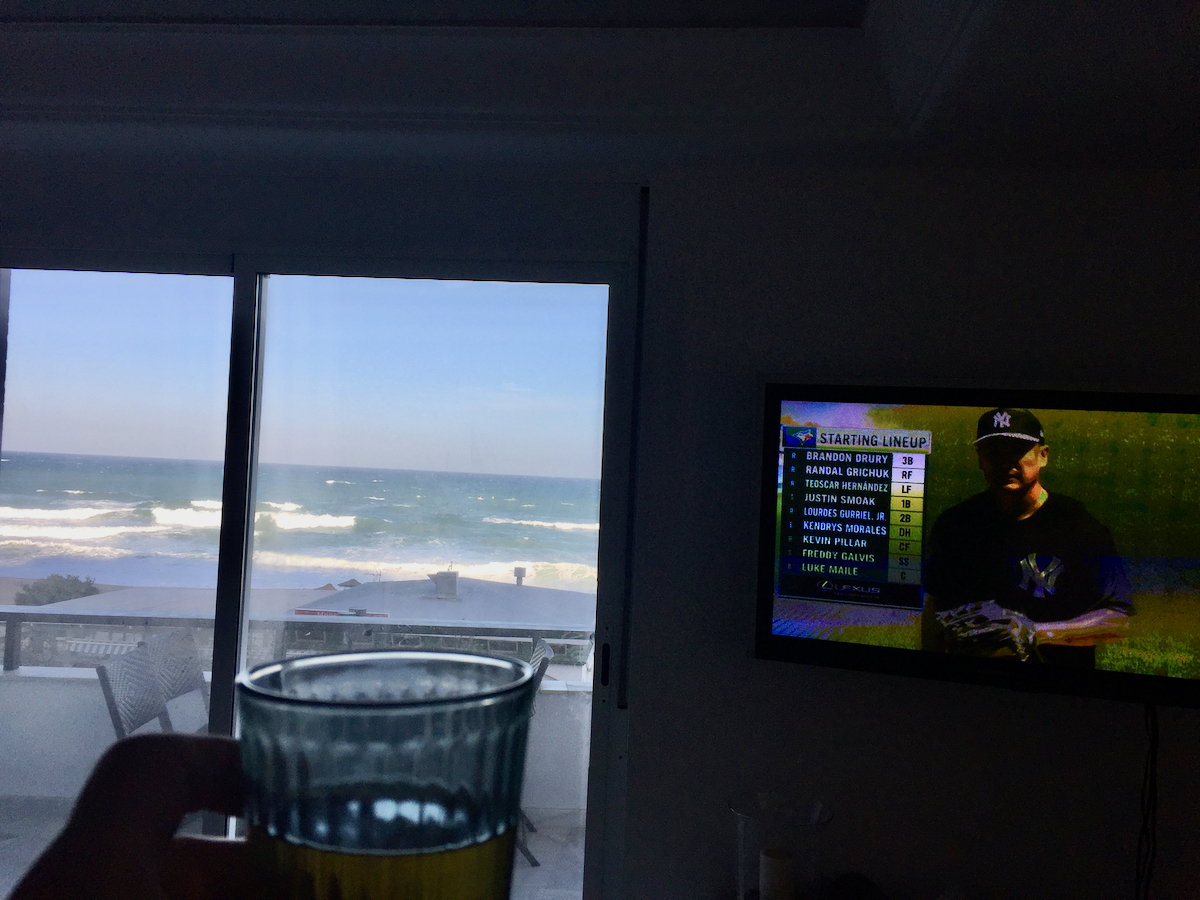
This is my favourite television viewing photo from the Costa del Sol. I took it in 2019. The apartment we were staying in had an Internet-based television service that provided over 5000 different channels from around the world. Here I am sitting beer in hand watching a Blue Jays spring training game in real time. Doesn’t hurt that the Mediterranean is as wild and as rough as I have ever seen it. Great memory, bad photo. 🙂
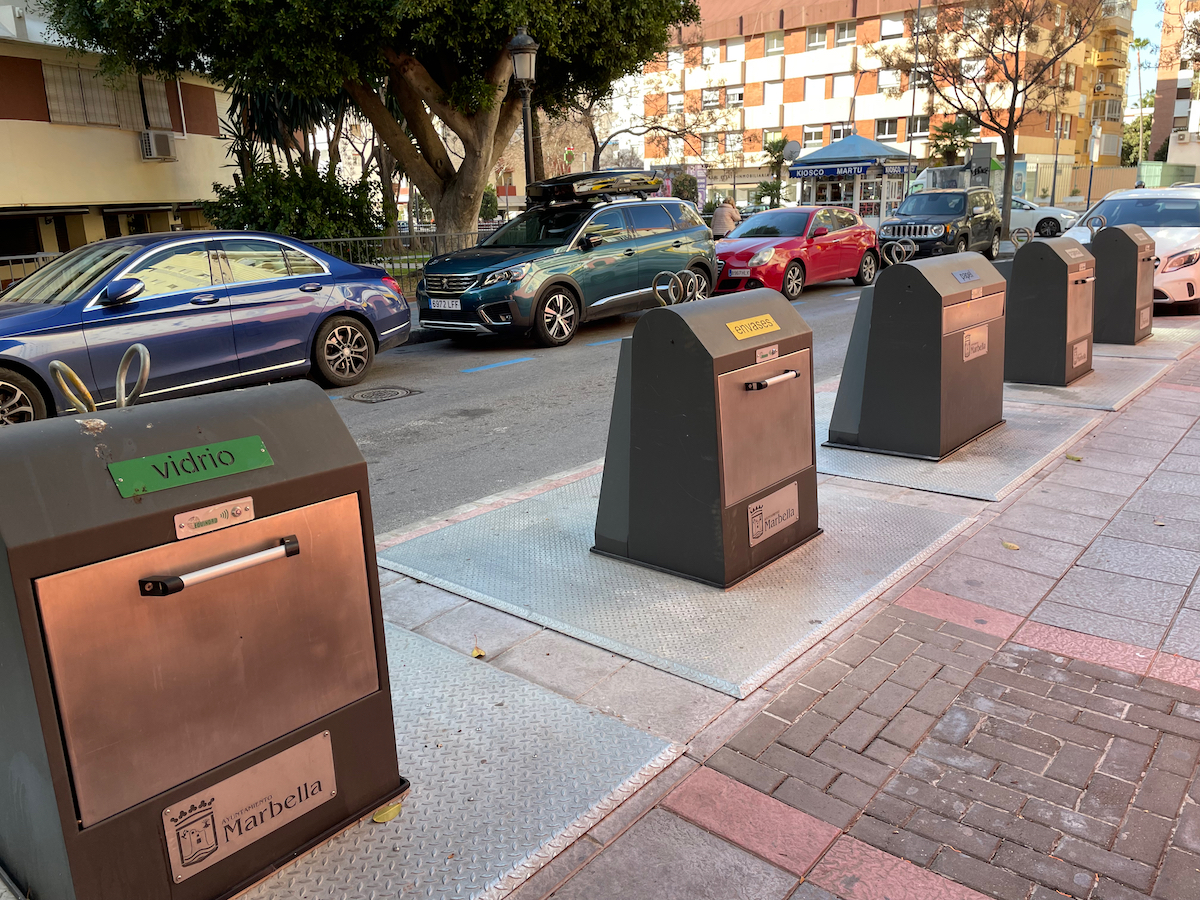
5) Garbage – OK, this one did not pop into your head, but you do need to know about it. It became an issue for us on our very first stay in 2017. We realized that we had garbage to dispose of and the owner had not left any instructions about what to do with it.
They have an interesting garbage disposal and recycling process here in Andalucia. You separate everything into groups (glass, paper, containers, etc.) and then you take them out and deposit them in their respective chutes out on the street in your neighbourhood. It is easy enough to ask your host where they are if you don’t see them immediately. I know that in other parts of Spain they do the same thing, but they use large above ground beans.
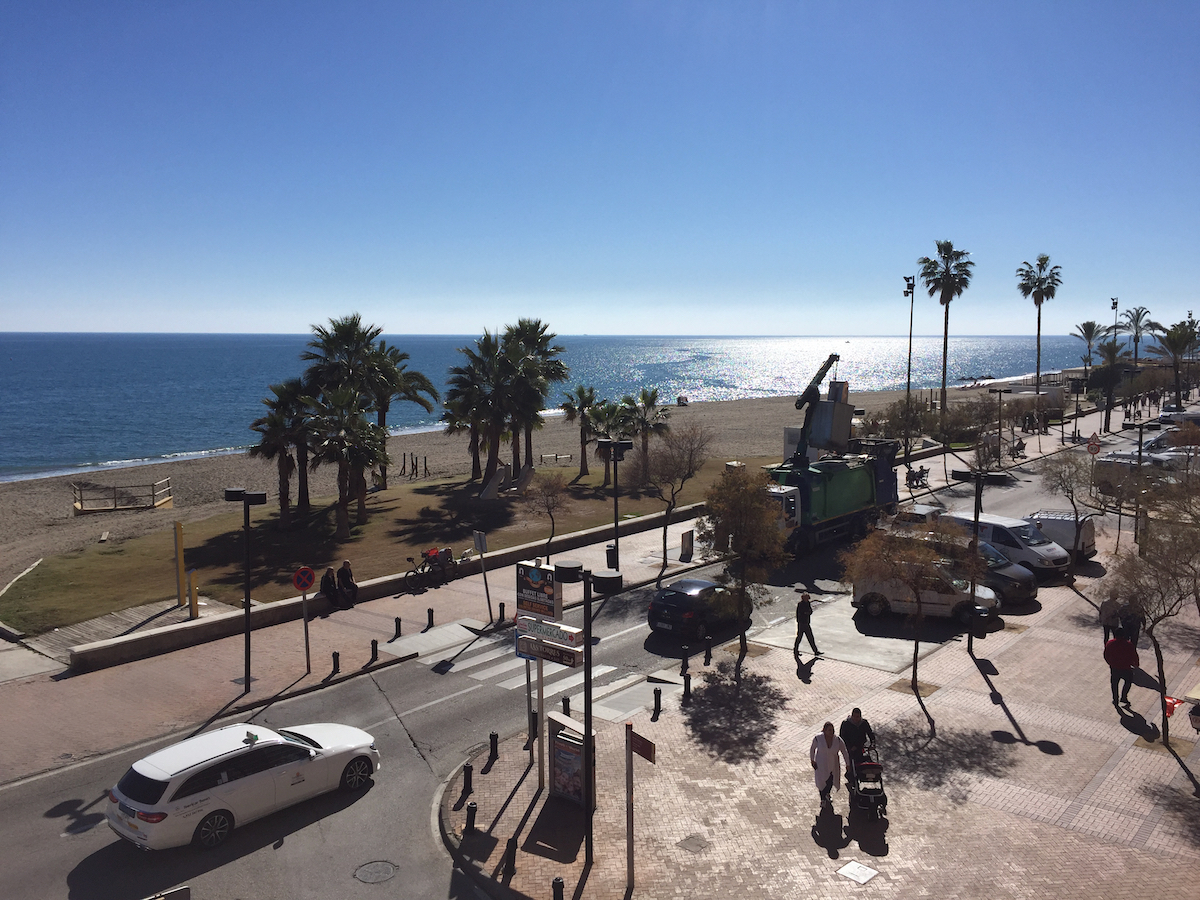
I thought you might be interested in seeing the collection process. Here you see a truck outside our 2019 apartment hoisting the large subterranean metal containers up out of the ground. Next they will swing them around and dump their contents into separate sections in the truck. The empty container is then replaced into its opening.
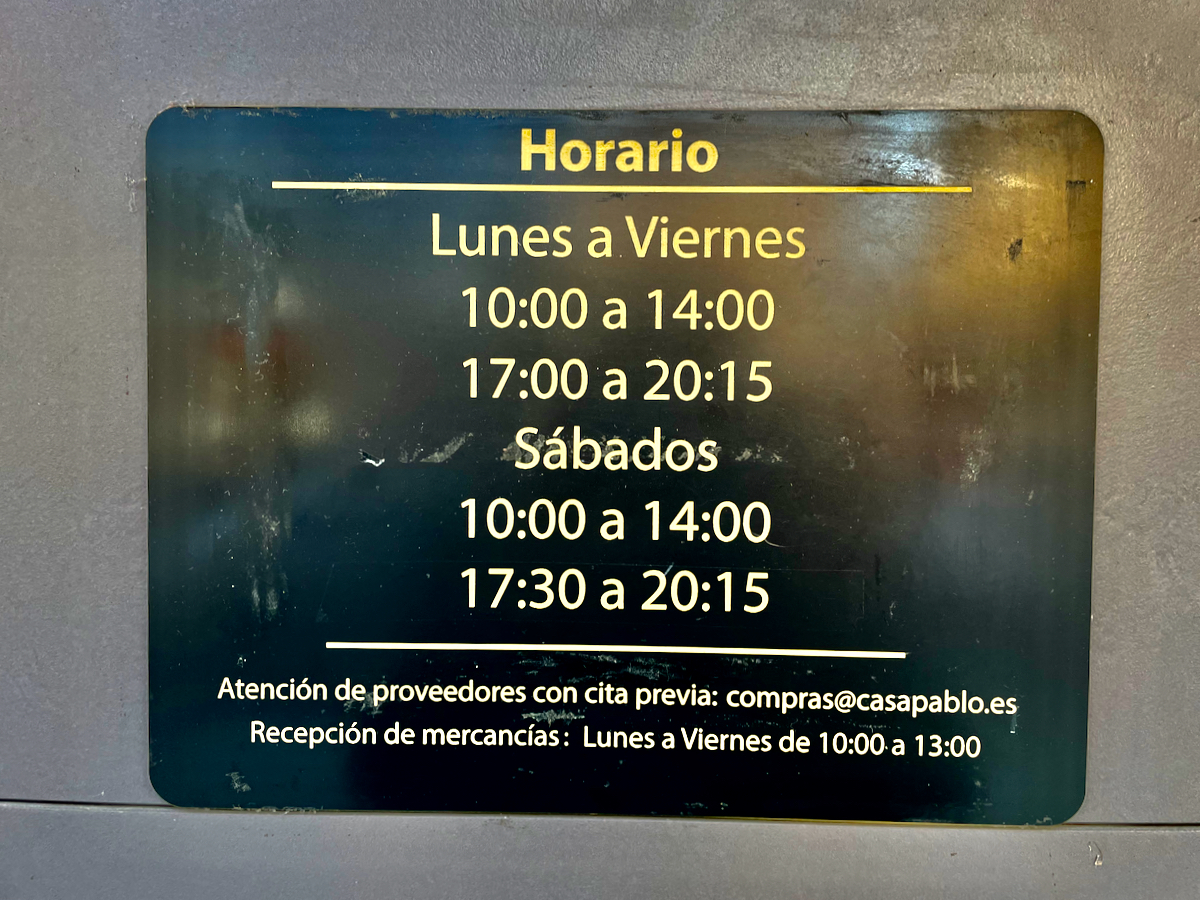
6) Shopping Hours – Here is an important bit of information you need to know. On the Costa del Sol, many if not most stores close between the hours of 2 and 5 PM. This would have been the traditional siesta period. I don’t think anyone naps anymore, but it is a very large lunch break in the middle of the day. Most stores reopen at 4:30 or 5:00 and stay open till 8 PM or later. The major grocery stores restaurants, and a few other services do not close during this period.
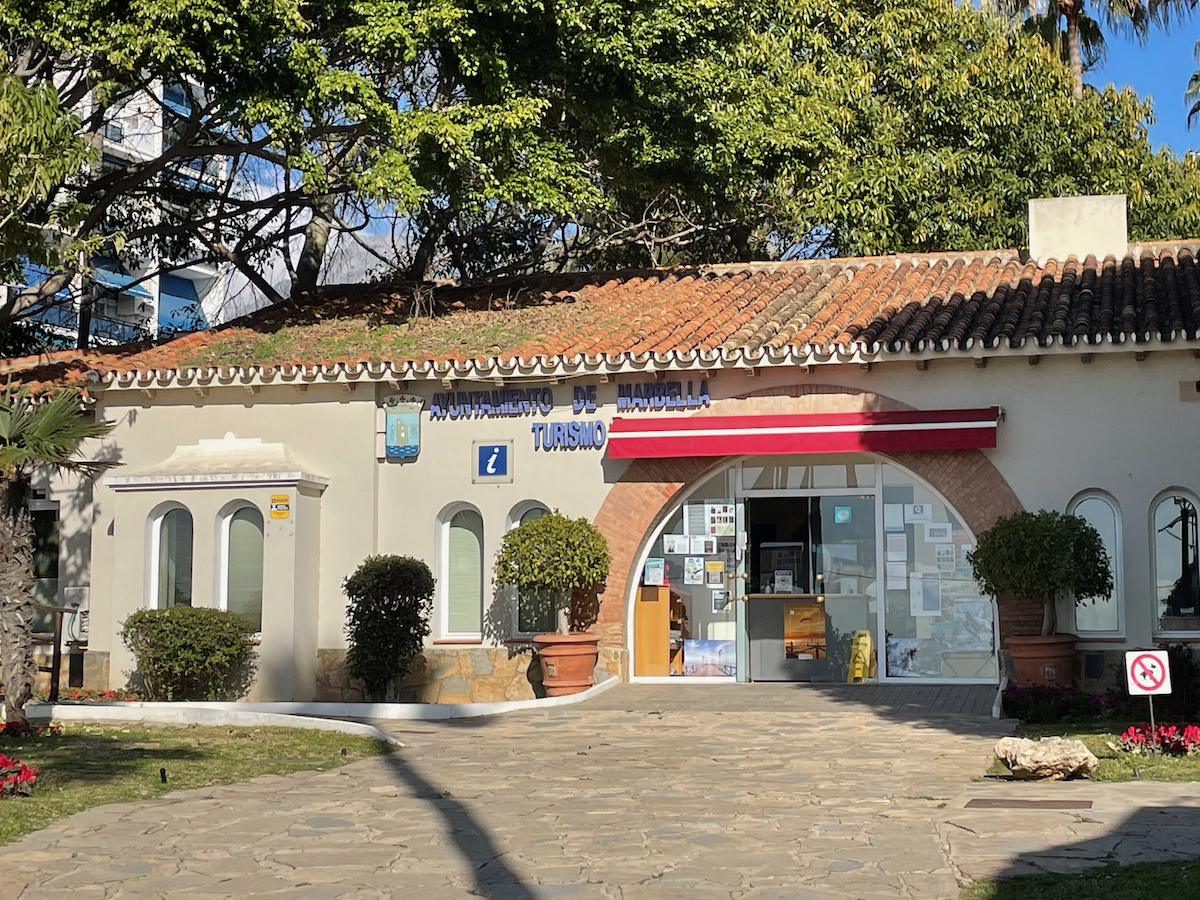
7) Tourist Office – As soon as you get to town, find the local tourist office. There will probably be more than one, so find the one closest to you. They are very helpful and a great source for very useable resources like maps and bus schedules. They can provide information about local events that are taking place or important areas in the city to know about. Virtually everyone who works there speaks English.
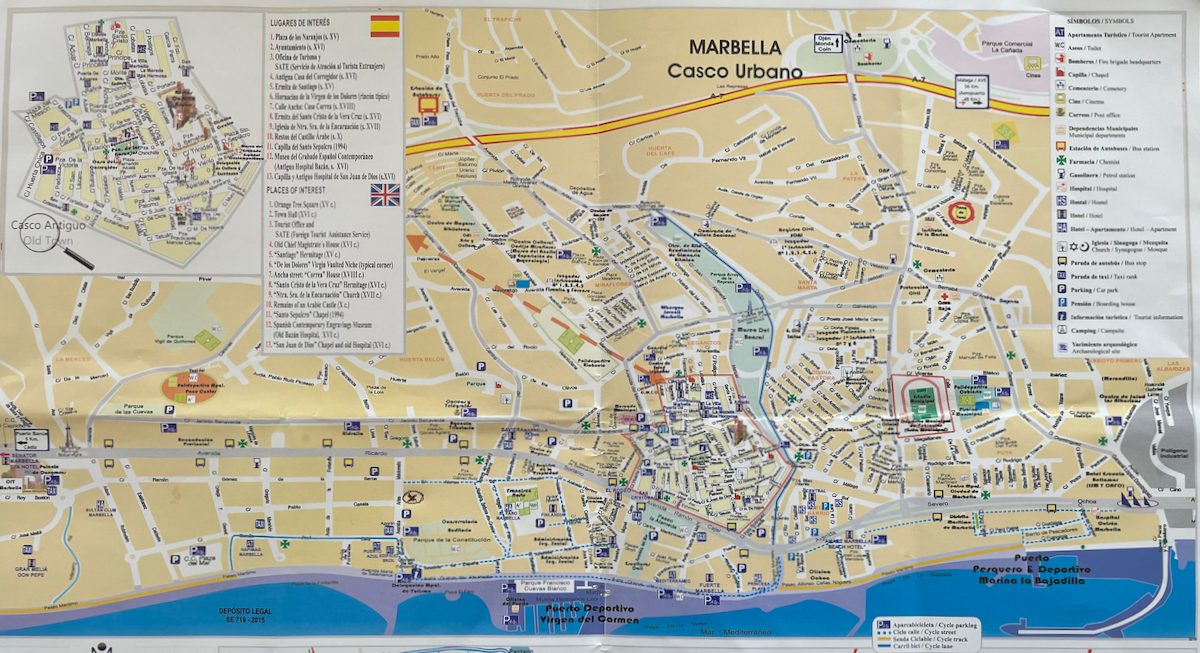
8) Finding Your Way Around – Here is the map of Marbella that I picked up at our local tourist office just after we got here. Yes, you will use Google Maps on your electronic devices, but it does not hurt to have a paper map with you. Often there are things marked on these, like taxi stands and locations of interest, that you may not find identified in Google Maps.
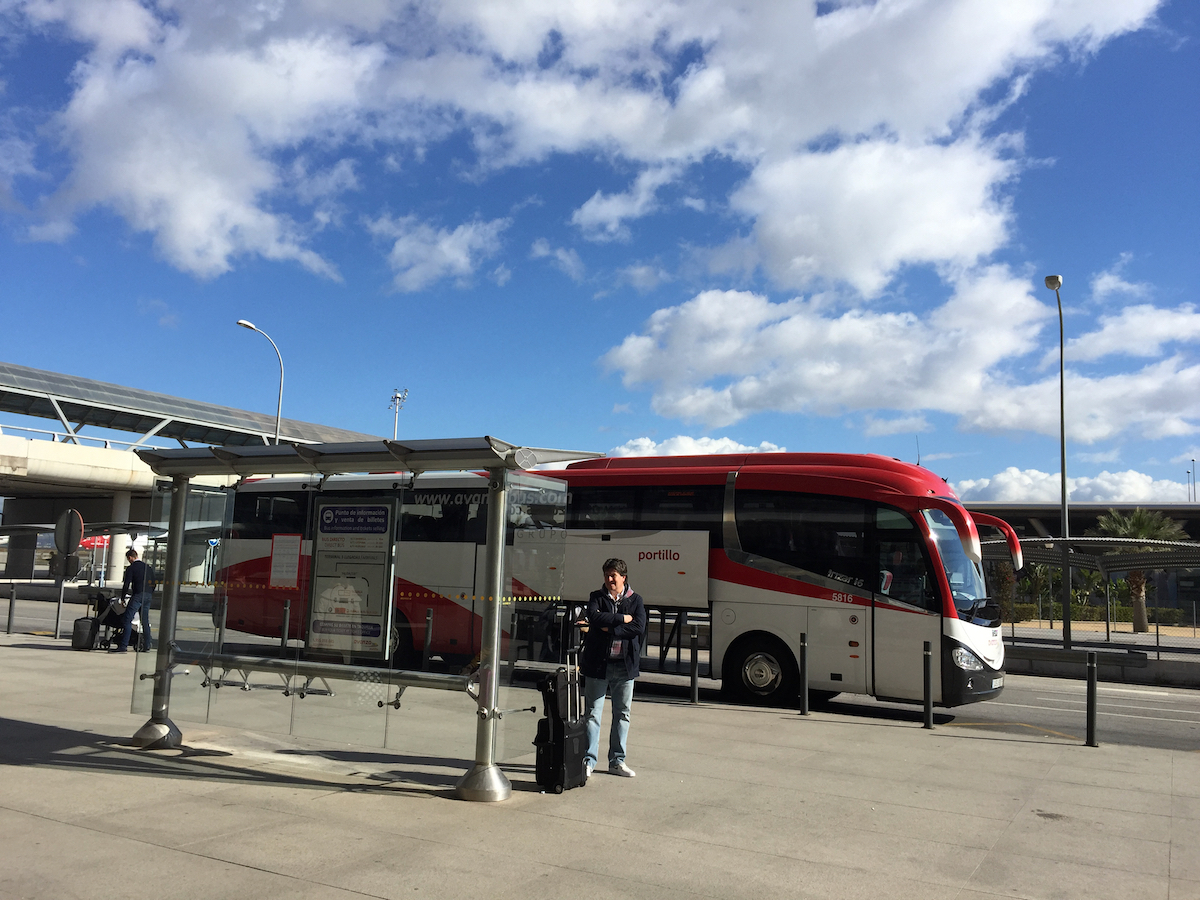
9) Getting Around by Bus and Train – I took this photo at the airport. This is the bus that runs between the Malaga Airport and Marbella. The national bus service is called Avanza, and it is excellent. Not only can you travel up and down the Costa del Sol very easily by bus, they also offer service to other major destinations in the Andalusia region like Seville and Granada.
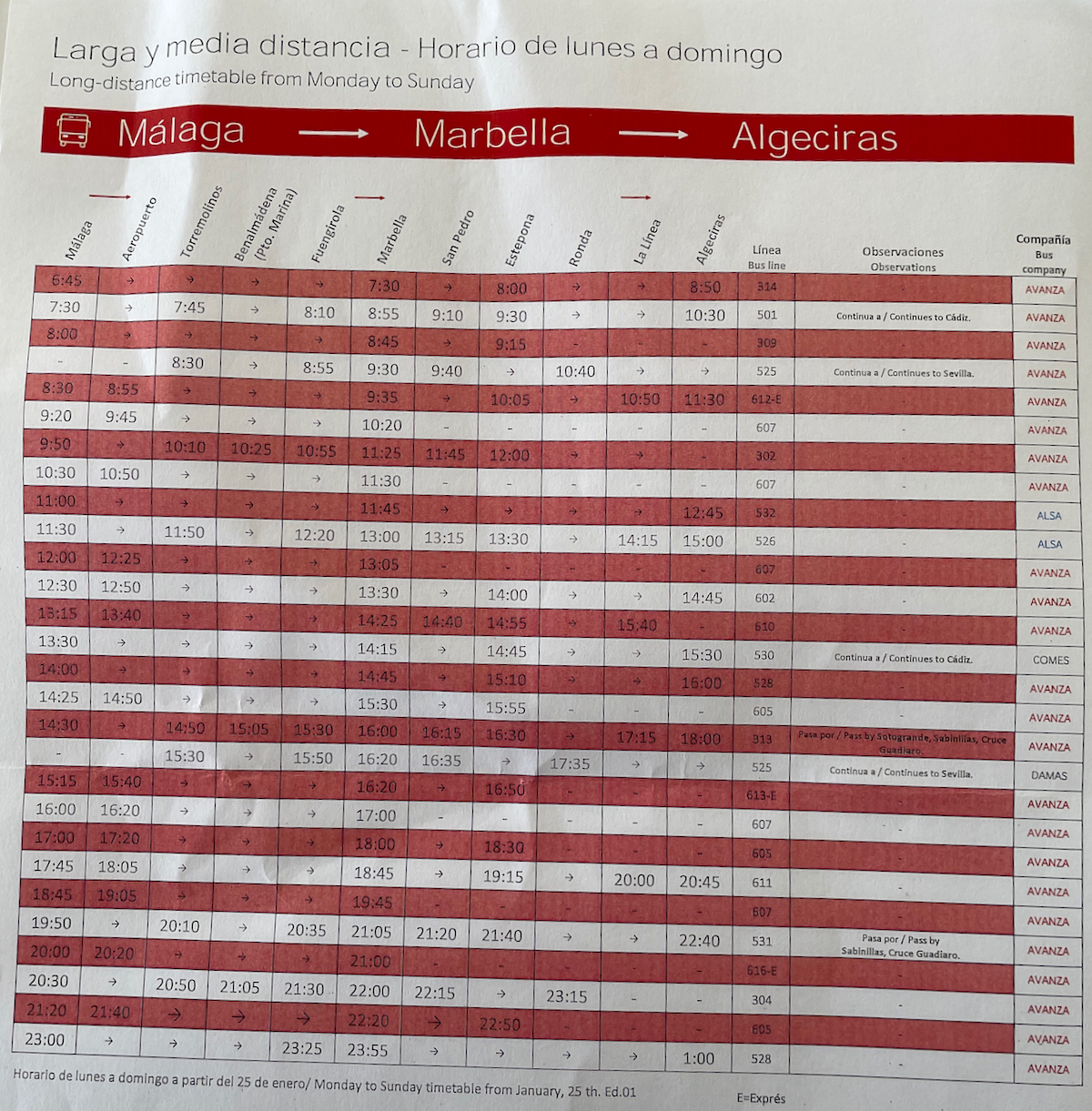
This is the bus-schedule for buses running from Malaga, with various stops along the Costa del Sol, going as far west as Algeciras. I picked this up at the local tourist office. They will provide schedules for all other routes as well, I’m sure.
Train travel in the region is somewhat limited. A high-speed train line runs between Malaga and Madrid with stops at places like Cordova. So going north and south is quite doable by train.
Otherwise, there is just one small train line, pictured here (from the costa sur.com site), that runs from downtown Malaga, stopping at the train station and the airport, and continues as far as Fuengirola. There are multiple stops at all the places in-between, but the entire trip takes about 48 minutes, so not a long line. It feels more like a subway than a train.

10) Getting Around by Car – Getting around by car is very easy. A lot of the municipalities, like Marbella, are spread out, so you may frequently find yourself catching a cab to get to places you cannot walk to and where the buses don’t run. We have not taken one yet this year, but in the past the rates seemed very reasonable… and like restaurants, you don’t really have to tip.
The one thing you do need to know about when taking cabs is that you must walk to a taxi stand to grab one. Hailing them on the street doesn’t happen here. I believe you can phone for one to come to your locale, but if you are staying in the city core, you will typically be able to find them within easy walking distance. There is one just down the street from us this year.
Update: Since I wrote this we have had to use a taxi. The trip was about 10 minutes long and took us approximately 3 km from home. The cost was €6.17. That is about $8.84… very reasonable.
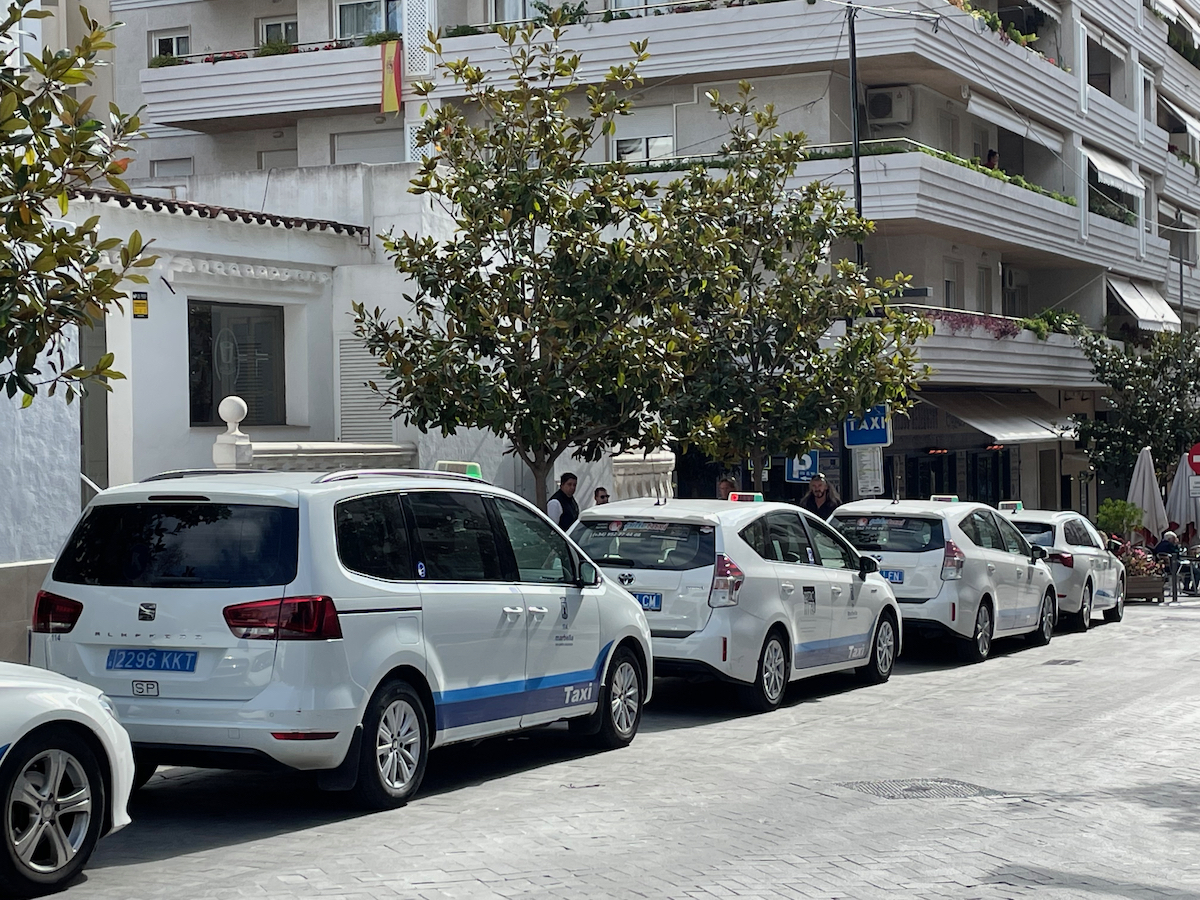
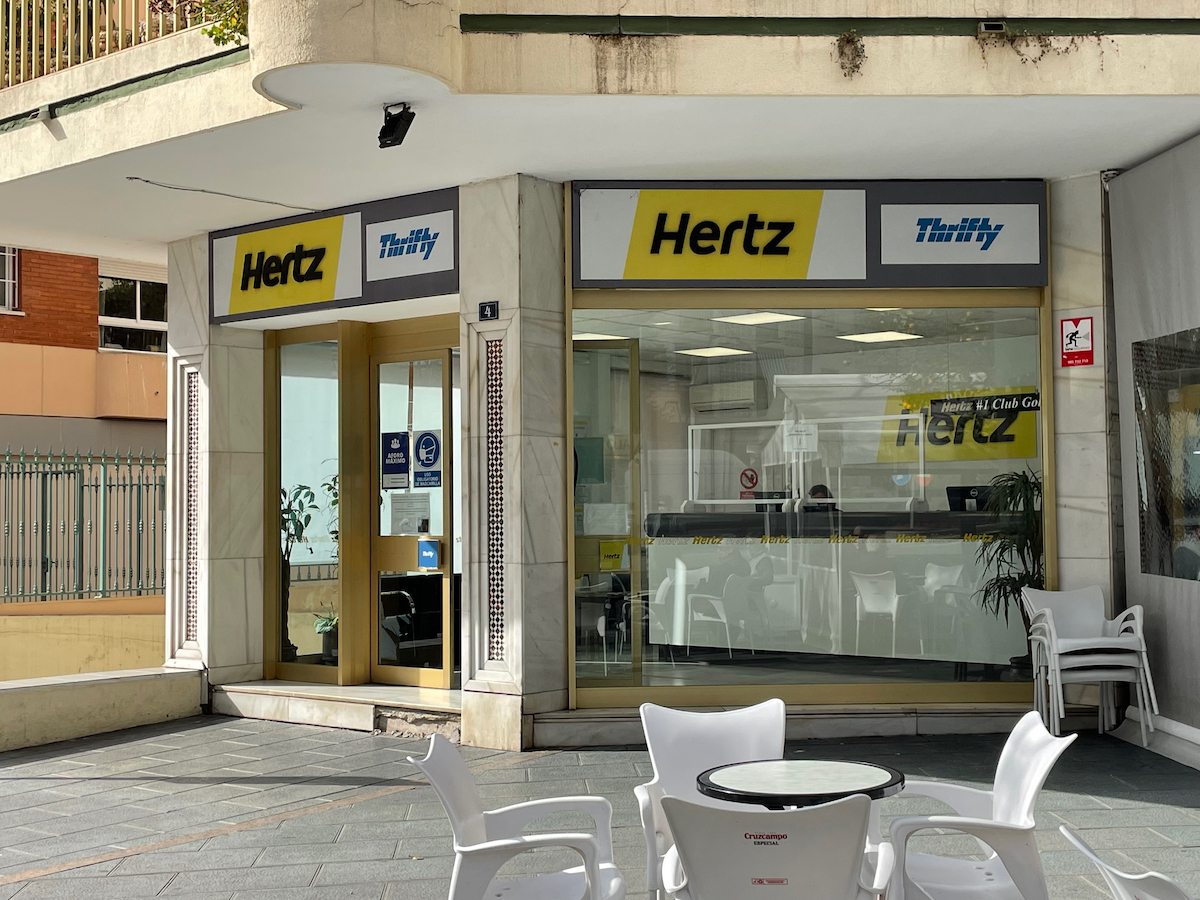
If you want to drive yourself around occasionally, no problem. It is very easy to rent cars here. I do recall that they are generally more expensive than what we pay in North America. A fabulous four-lane highway runs the entire length of the region, so it is very easy to hop in a car and get to other towns up and down the coast relatively quickly. And, it is a very scenic and easy drive to boot.
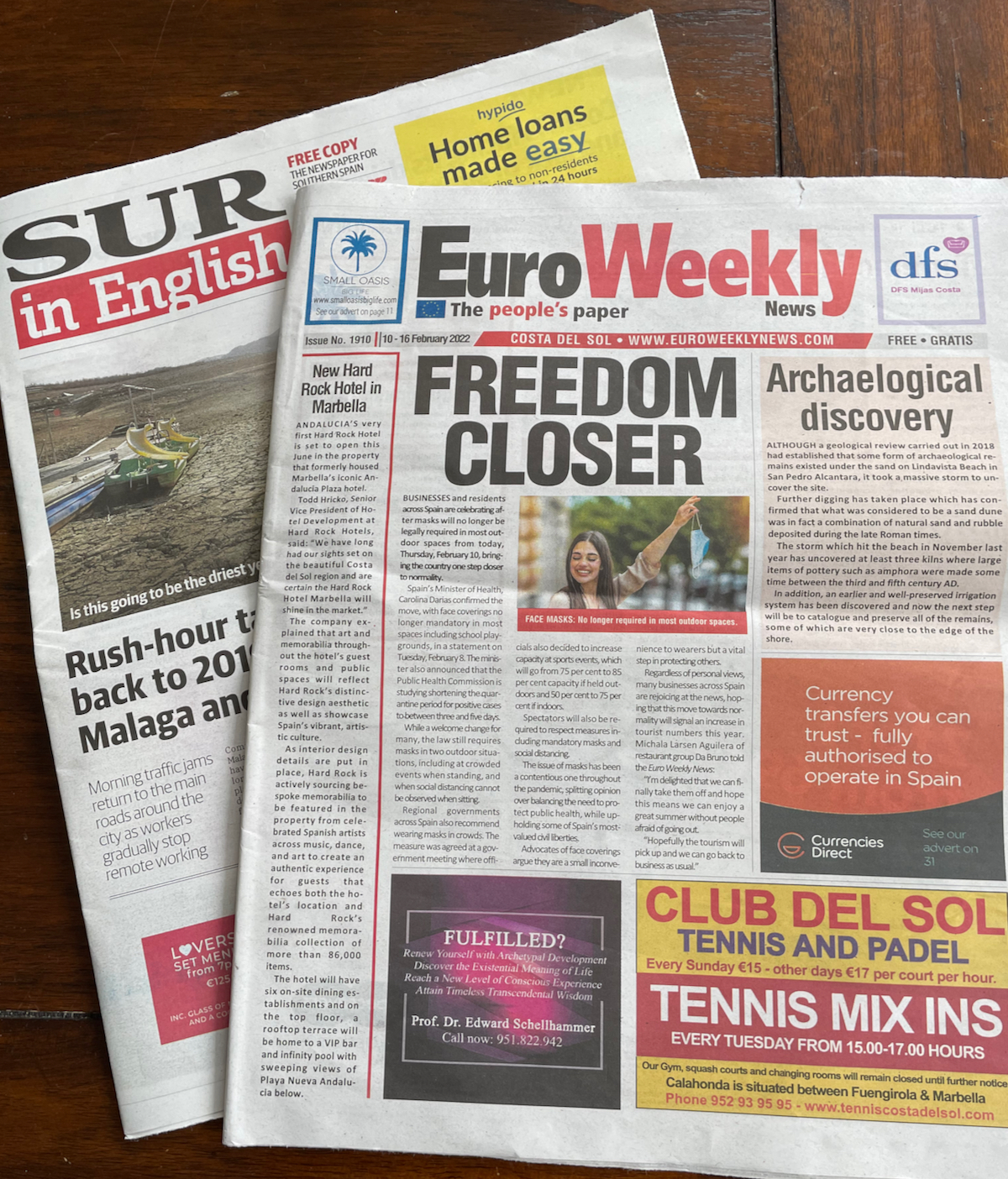
11) Local News and Information – It is always a good idea to stay in touch with what is going on in your community and in the region as a whole – if only to make yourself aware when an upcoming special holiday or event will result in everything in town being closed for a day.
A couple of weekly papers are printed in English here. They will fill you in on local news and perhaps provide some ideas of places to visit or cultural events to attend.
They used to be widely available, but we were informed this year by the operator at a newsstand that they are very hard to come across during the pandemic. They simply are not printing as many copies as they used to because of the drop in visitors. She did remind us that they may well be available at the tourist office, which as you can see, they were. They normally come out on Fridays and are free.
12) Covid Issues – I have discussed Spain’s pandemic response in an earlier article, but the more time we spend here, the happier we are with the country’s overall approach. They are still getting the message out that masks must be worn, and social distancing must be maintained. Although the outdoor mask mandate ended last Thursday, we continue to see many people wearing masks while walking around outside.
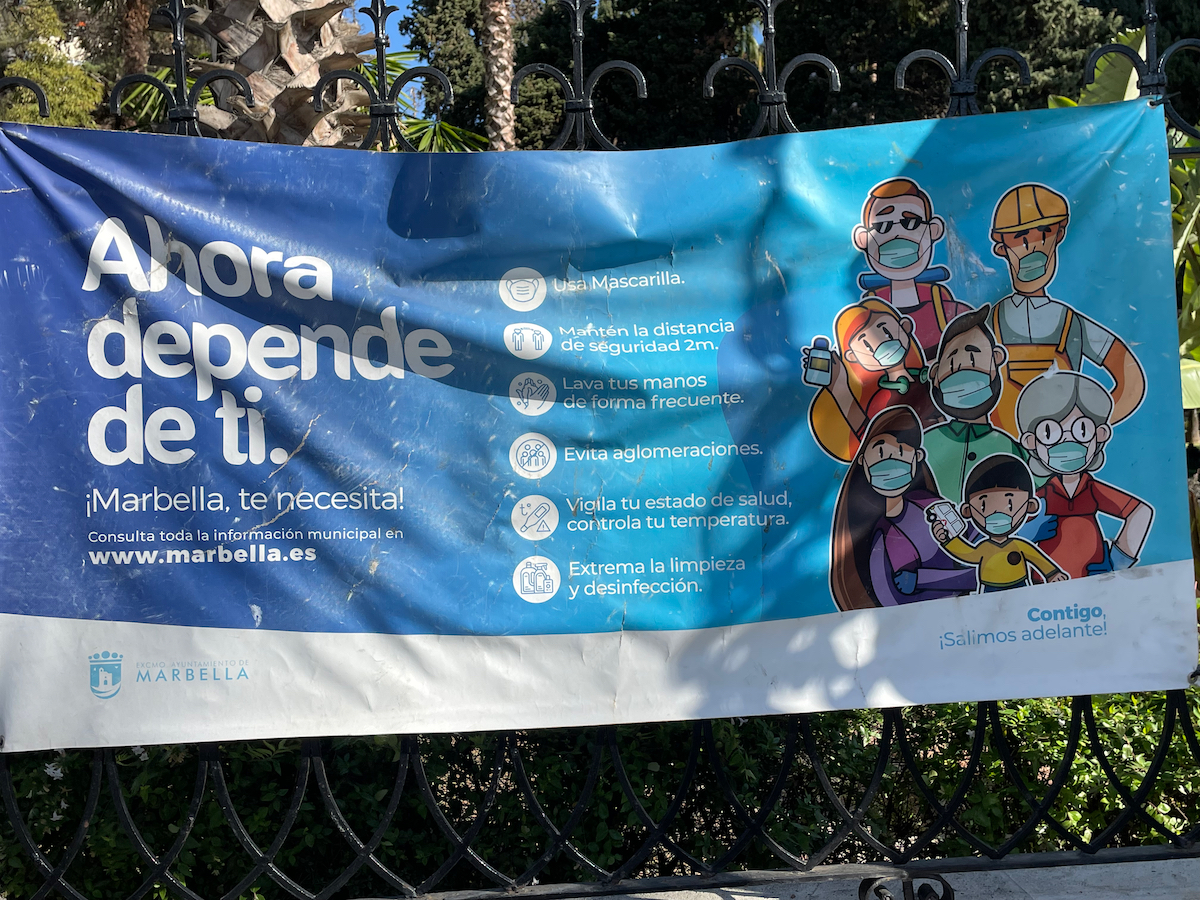
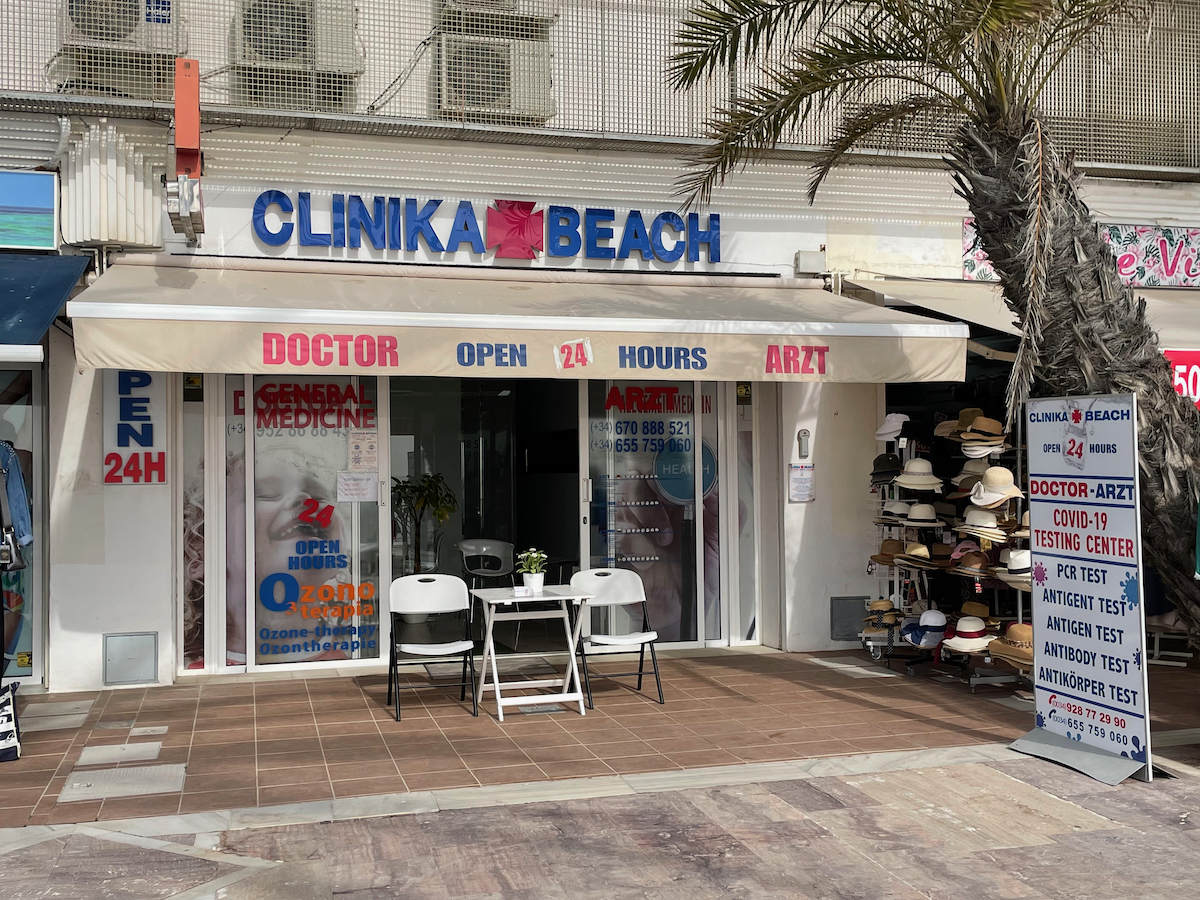
We spotted this down on the beach our first week here. Here in Marbella at least, there is a clinic where you can go to on a 24-hour basis to get Covid testing done. You would have to pay of course.
13) Calling Home – You may be thinking, “OK ‘mister-retiree-travelling-guy’”, I like your idea of having a local phone number, but the plan you signed up for does not allow you to phone home. How do you handle that?”
The answer to that is very simple. We have several methods we use to keep in touch with friends and family at home. First off, and most frequently, we have video chats using FaceTime or Zoom. If we want to make an actual phone call, a couple of other methods can be used.
First, we can use the app WhatsApp to make free Internet-based phone calls to folks at home who also have WhatsApp on their smart phones. The second method is to use the phone calling service provided by Skype. This allows us to make phone calls from our laptops to folks who prefer to receive their phone calls on their house phone. The service is extremely inexpensive. Off the top of my head, I think it costs us about $10 for about 300 minutes of talking time.
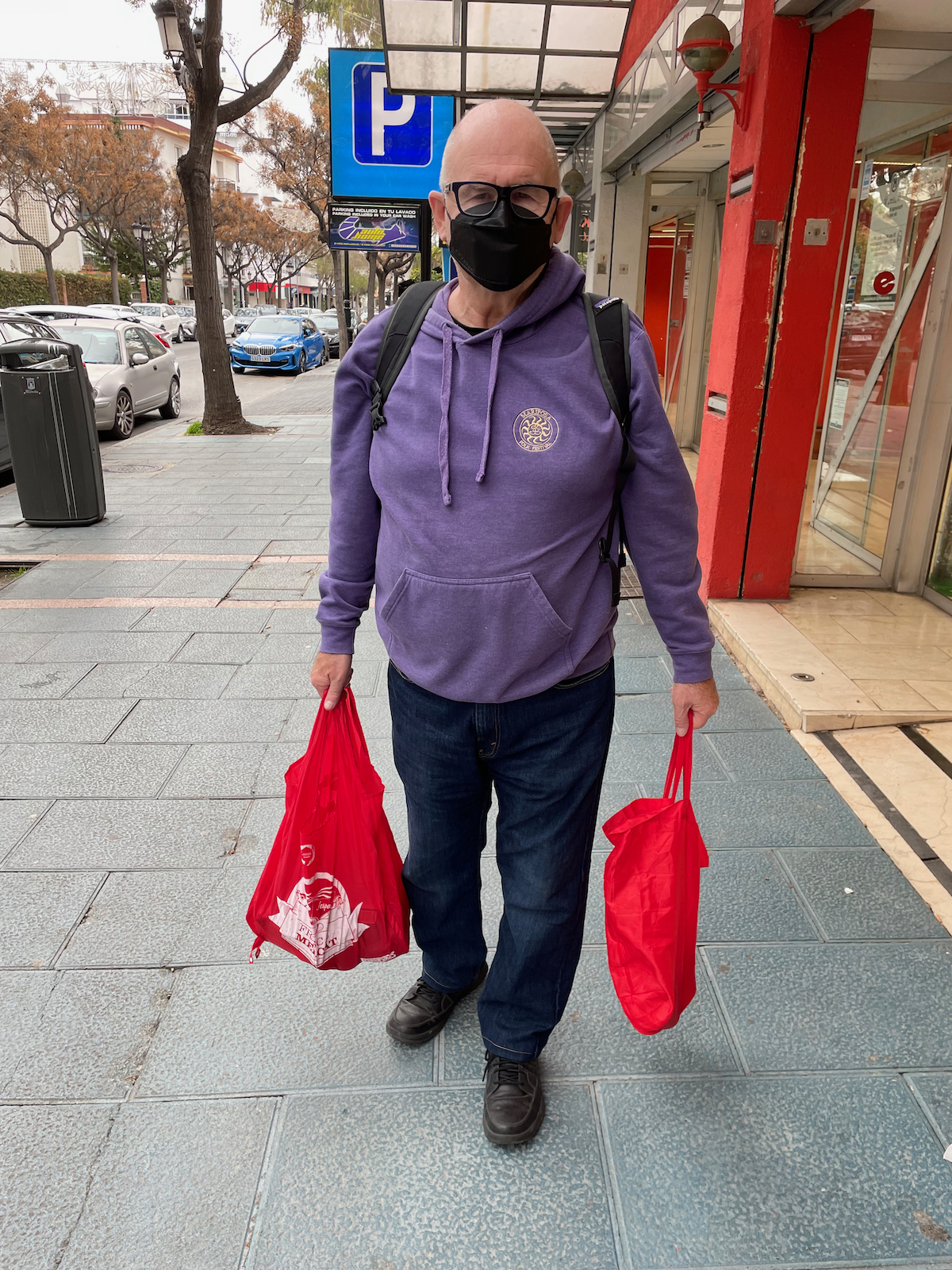
14) Schlepping the Groceries – Grocery shopping is the task that you will probably be performing more than any other while you are here. As I’ve said previously, we like to be able to walk to do this. To do this most comfortably you generally have to be equipped like I am here. Take your backpacks and a couple of those reusable, collapsible, almost weightless grocery bags with you. Not to worry, if you forget to bring them you can probably buy them here.
“Again, ‘mister-retiree-travelling-guy’ that’s several times now that you have mentioned grocery shopping. You have said this is something we would be doing on the first day and frequently after that, so why have you left it till last here and why have you not explained to us how exactly we’re going to go about doing that?”
Because my fellow travellers, my next post will be entirely about grocery shopping here in Spain.
Next Up: Grocery Shopping, the where, the when, and the how.


Again, great information and practical details….I am so appreciative
I live to serve. 🙂