
You may have already decided that our “winging-it” method of travel, even before you read about how that all plays out, is not something you would feel comfortable trying out. Fair enough. But, even if you are thinking that this isn’t for you, some of the points raised here might offer you some ideas worth integrating into your own travel plans.
We typically use the wing-it approach on any trip we take anywhere in the world. But, for the purposes of this post, I will use an extended visit to Europe as the working framework.
Rough Itinerary
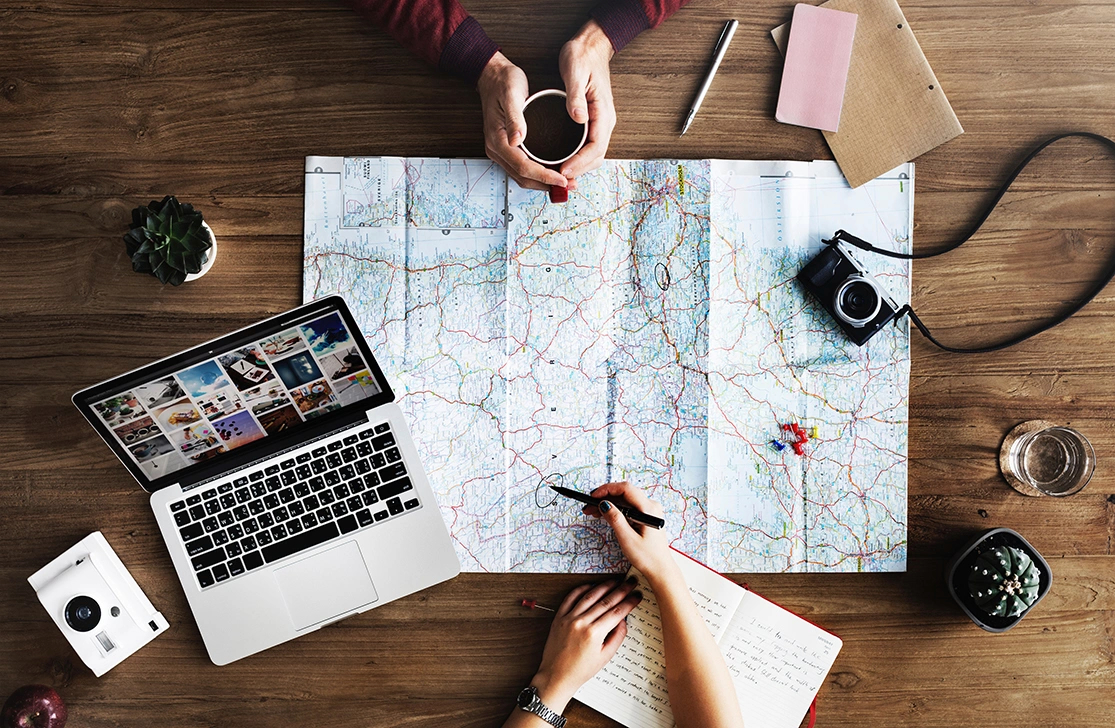
One of the things we do before leaving home is strike a general itinerary of the places we would like to visit. We say rough because it isn’t unusual for us to change our plans once we begin travelling around.
Sometimes we change plans because events in a particular place make it more difficult to find places to stay. In 2015, while travelling in Spain we had planned to travel from San Sebastian to Madrid. However, when looking for accommodation we discovered that it was virtually impossible to find a hotel. We had missed the fact that there was a national holiday, and most of the related events were taking place in the capital. The net result was, we went down to Seville and enjoyed the holiday events there, and then wandered back up to Madrid at a later date. Sometimes we deviate from the plan because we decide we want to travel to a location we had not considered before leaving home; or it may simply be because we want to stay longer in a city or region than we thought we would originally
Time of Year
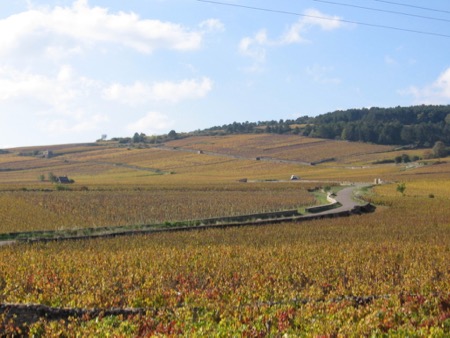
We typically travel, especially to Europe, on the shoulder seasons; spring or fall, never summer. Summer is when most working/non-retired folks are travelling, and when many Europeans are vacationing. Restaurants, hotels, and all the places and sites that you probably want to see or visit are filled to capacity.
In the spring and fall, the kiddies are in school, fewer people are taking their vacations and travel becomes more restricted for lots of folks. Typically, most things are less expensive at these times of year as well, so it’s the perfect time for we retired folk to be getting out and about.
Accommodation – Hotels
The one aspect of our travels that probably makes our friends most nervous is how we, or how we don’t, book accommodation before we leave home. As you might have read in the previous post, before leaving home, we generally only book a hotel, or some other accommodation, in the city into which we are flying,. You never want to arrive in a city jetlagged, and then start looking for a place to stay. And, it’s never a good idea to arrive in a new country and have to respond to the customs question “where will you’ll be staying” with “no idea’.
That said, there are a wide range of accommodation options for travelers, and we have tried out a goodly number of them. Most are relatively easily booked, and are available at a wide range of price points.
Hotels – Booking Online
We typically book accommodation online. There are very few places left in Europe that you can’t contact via the web or book directly online. With hotels, there are many ways to book, so you should be able to find one that works for you.
When booking hotels we have used a variety of hotel clearing house sites that list rooms for rent, in a variety of hotels, at discounted rates (Hotels.com, trivago.ca, Booking.com, Expedia.ca, etc.) with lots of success. It is always good to have an idea as to what part of the city you want to stay in when making your selection. Additionally, when using any of these sites, it never hurts to go directly to the website of the hotel you are considering before accepting the clearing house offer. Occasionally you will find the hotel itself is offering an equivalent or better rate, and/or more advantageous booking conditions.
Hotels will normally print tickets or documents for you, provide maps and directions, order cabs, have English speaking staff, and tell you where to find local services like a grocery store or a laundromat, etc.
Hotels – Favourite Chain If you prefer staying in hotels over other types of accommodation, it is generally a good idea to have membership in a chain that you have found suits your needs and budget, and with which you might get preferential booking considerations and pricing. In Europe, and other parts of the world for that matter, we use the Accor chain of hotels (http://www.accorhotels.com/gb/canada/index.shtml). They have a wide range of product lines; economical (Ibis), midrange (Mercure/Novotel), and luxury hotels (Sofitel). We typically stay in Ibis hotels when we go this route.
This is not to say I am recommending the Accor group for your consideration, or that I endorse them. It is simply an example of a type of European hotel chain that may work for you. Others we have tried, and have had good success with, are Scandic and Radisson Blu. A simple Google search for “affordable European hotel chains” will bring up links to a number of sites listing reasonable offerings.
Hotels – Boutique (Travel Guides)
The other great hotel option is individually owned smaller, local hotels. We would probably refer to them as boutique hotels in North America, but in Europe the hotel business is not dominated by the big chains the way it is in North America. There are usually many local, non-chain options. Typically, the furnishings are not quite as modern as in some of the chains, but the beds are normally comfortable, the staff are very helpful, and most are downright charming.
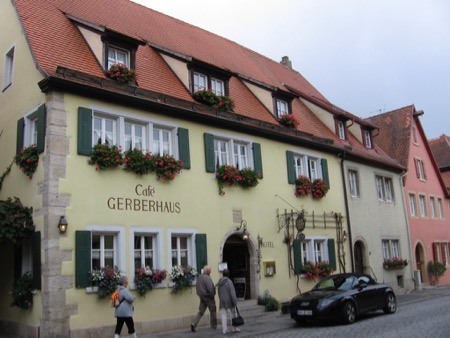
Our own “go-to” procedure for finding these places quickly is in travel guides. We have had very good success using the Rick Steves‘ series of guidebooks to find these cheap and cheery, privately owned hotels. A couple of good examples where we have stayed are the Café Gerberhaus (http://www.gerberhaus.rothenburg.de) in Rothenburg, Germany, and the Hotel Sonya in Rome (http://www.hotelsonya.it/default.html).
Accommodation – Other
It may seem like I am a little fixated on hotels. However, we definitely look for other options when we are planning an extended stay in one location.
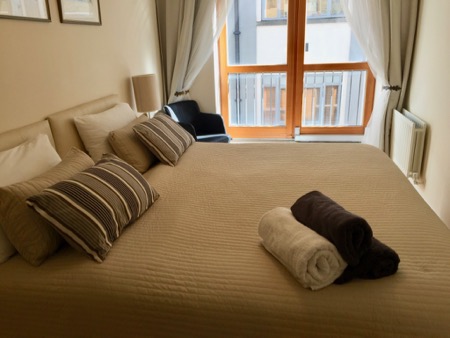
It would be very difficult to miss the presence of AirBnB these days. And, we have used the AirBnB site a number of times in Europe, mostly with great success. This approach is not necessarily less expensive than staying in a hotel, but if you are looking for more of an apartment type of situation, rather than a hotel room, you should consider using this type of rental. We do it if we are planning on staying at least a week in one spot. But, they certainly should be considered as a viable alternative for short term stays as well. It allows you to prepare all your own meals, accommodate more than two people in one place if you are travelling with another couple, do your laundry, have a refrigerator to keep your beer cold, etc.
It is also important to be aware that there are actually a number of other person-to-person rental sites like AirBnB, so there are lots of options. Be sure to check out HomeAway.com, VRBO.com, holidaylettings.com (European based), and others you can find by doing a simple Google search if you are interested in exploring this option.
If you are a fan of Bed and Breakfasts, not to worry, Europe is awash in them. We have never stayed in one ourselves, but we have friends who have, and they find the experience to be exactly the same as at home. When searching, you will first need to determine what a B&B is called in the country you are travelling to. (e.g. France – chambres d’hôte). The real benefit here is you are living with some locals who can be great sources of information.
Language Differences
One of the things I get asked about most frequently is, when you are “winging it” how do you deal with trying to communicate with people when they speak a totally different language? This can be especially true when travelling in Asia where the spoken and written languages bear very little resemblance to western languages. However, even in Europe you can be faced with constantly changing communication issues if you are travelling through a variety of different countries, each using a different language.
Not to worry, it is typically less daunting than you may imagine. First-of-all, English has become the “langa franca” of the 21st century; with apologies to the French whose own language has been usurped. In most travel hubs like airports and train stations, signs will typically be posted in both the local language and in English.
Additionally, in most situations where you need to communicate directly with another person, money is typically going to flow from you to them (restaurants, hotels, cafés, taxis, etc.), so most of those folks will work hard at making communication happen. It is always a great idea to learn some important phrases in whatever country you happen to be; e.g. please, thank you, a beer please, a glass of white wine please, where is the toilet, etc.
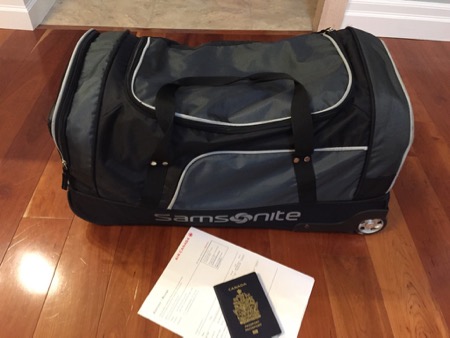
Travel Light
You’ve probably heard this mantra chanted on every travel show you’ve ever watched, or read it in every travel book you’ve ever cracked. Travel light. What that means is “compactly”. Think layers of clothing for different weather conditions. Figure out the minimum amount of clothing that you need to take with you to last a reasonable period of time, say a week, and pack only that amount. Plan on doing laundry, and/or rinsing out things in the sink.
Secondly, take only a minimum amount of “stuff” with you. You can easily buy whatever you need if you run out, or require a specialty item for a single use. We are going to Europe for a month this fall. Part of the trip will be an eight-day bike excursion. My biking gloves take up next to no space so they will go with me. My bike helmet will be staying home because I do not want to schlep it all over Europe. I will buy one locally just before we start the bike trip and ditch it as soon as we are finished.
Take a small, light suitcase with wheels. You will most likely be doing a lot of walking with your bag, and potentially carrying it up and down a lot of stairs. If you are a very efficient packer you should be able to get away with a carry-on. Occasionally you can find a carry-on with wheels that also has back-straps, so you can strap it on your back when necessary.
Like most people, I tuned out the “travel light” message, and learned this lesson the hard way. In 2002, the Love-goddess and I did a four month around-the-world trip. Basically, we knew we would be experiencing four different seasons so we felt compelled to pack accordingly. This meant we hauled around two enormous suitcases plus our laptop bags. It didn’t take long for us to learn the error of our ways. The most memorable this-was-a-bad-idea moment came in Antibes, France. I struggled mightily to get the bags through the turnstile leading out onto the platform at the train station. Needless to say, this attracted a small crowd of bemused onlookers who were eager to watch the village idiot perform. After I finally made it through, and was heading down the platform, I heard someone behind me utter in disgust, “américain”; I did not turn to correct him. Lesson learned.
Good old Rick Steves provides very sound advice on packing light. Check out his “Packing Light” resources, listen to his “Packing Light & Right” Travel Talk, or watch his “European Travel Skills: Packing Light” Video. In fact, bookmark his site, and visit it regularly; he offers a seemingly endless stream of excellent travel advice and information.
Eating
Eating in Europe is a wonderful experience. They tend to take their food very seriously, and take pride in preparing and serving fresh, tasty meals. Grabbing a readymade sandwich or street food will often result in an unexpected treat. Try and avoid the fast-food chains you might visit at home.
Yes, you will end up eating a lot of meals in restaurants when you stay in hotels. I find that a good way to lower this cost is to try and get in the habit of eating your main meal at lunch time. Generally, the prices will be lower than in the evening, and many restaurants offer lunch specials. And remember, in Europe wait staff are usually well paid, so tipping is not expected. Having said that, leaving a small tip, often just the coins that come with the change, for good service is a good thing to do, and usually greatly appreciated.
Try and avoid restaurants that have English signs, especially in tourist areas. There are usually geared to extracting tourist dollars. Try searching out ones off the beaten path that appear to cater to the locals. Don’t be afraid to ask if they have an English menu; many restaurants in Europe will have them, even if they are not in a tourist area.
Don’t pay for breakfast in your hotel if you can help it. You will usually pay a premium if you do so. They are tapping into tourists’ fear of going out, or the appeal of convenience. Occasionally when you book you might get a room that includes breakfast at a very good overall price, but if it is an add-on it is best to avoid it. Options are find a local restaurant and eat there, or buy breakfast materials in a local grocery store and eat in your room. The Love-goddess always travels with a plastic bowl and spoon for cereal. Pack some light plastic utensils if you have room.
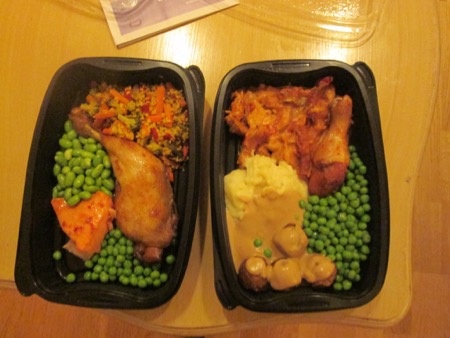
Visit local grocery stores or markets and buy things that you can whip up into a meal. Many grocery stores also have delicious prepared salads or even hot takeout food that you can take back and eat in your room in the evening. You may also have seen or read that buying fresh food at a local market and having a picnic is a good thing to do. Absolutely, it is a fantastic thing to do. Being able to crack a bottle of wine with your picnic lunch is usually perfectly acceptable in most city parks.
Next Up: Heading to Europe? How We travel-The Specifics-Part B
*Note: We are not responsible for, nor do we endorse the content of the websites identified above, and your access and use of these websites will be subject to the terms and conditions of those websites.


