First up, a quick 48 hours in Toledo from Good Friday until Easter Sunday. Toledo is known as “the city of the three cultures”: Christian, Muslim and Jewish. We did not get a chance to visit any of the well-preserved historical mosques or synagogues. Next time!
However, we squeezed in as much time as we could to check out the sites and events synonymous with Easter weekend in Toledo. Easter weekend festivities close out Semana Santa or Holy Week in Spain. Holy Week, of course, began as a purely religious celebration. Most recently, it has evolved into equally as much of a cultural, social, and tourist event.
The Toledo Cathedral
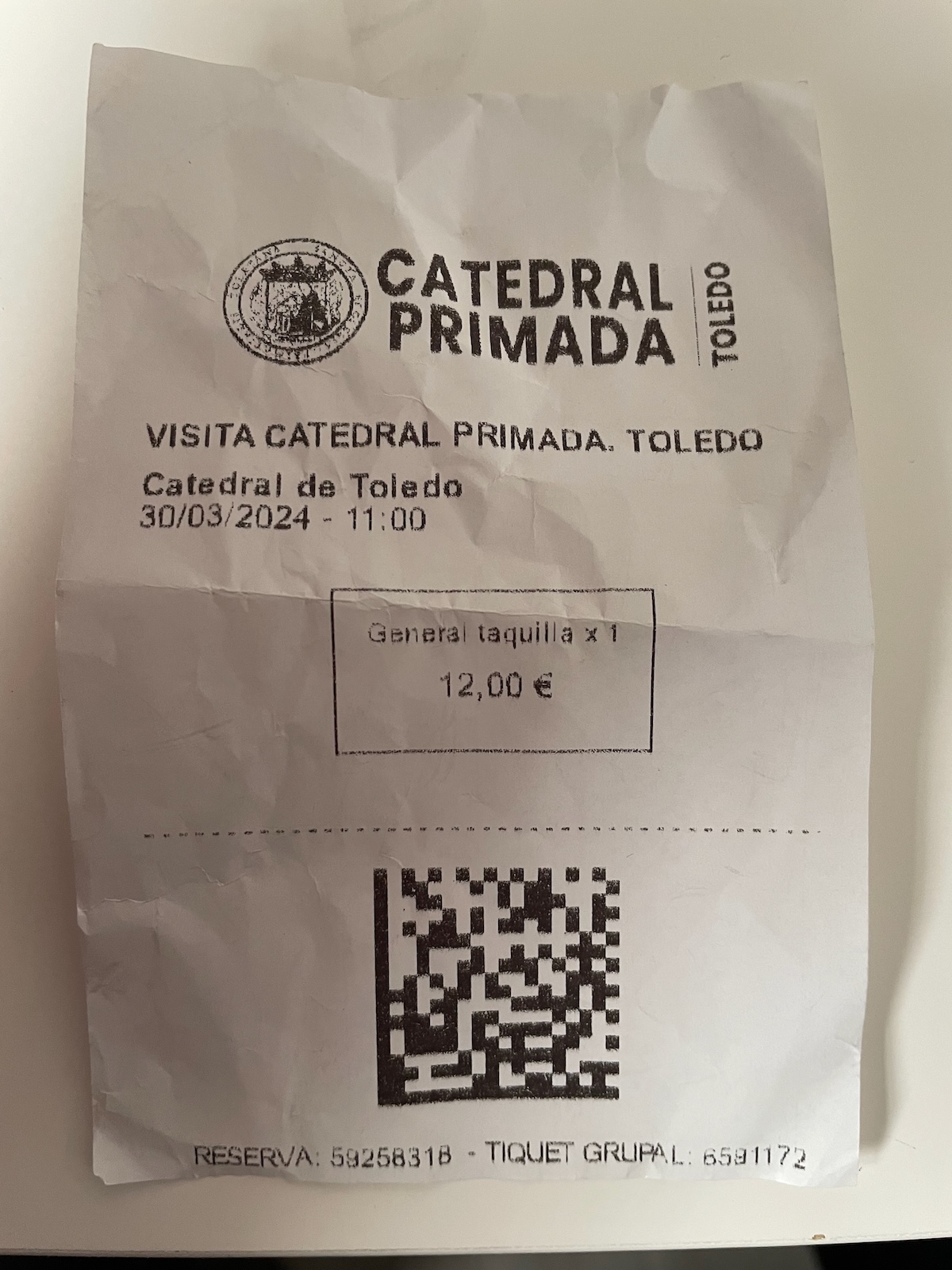
After a good night’s sleep, we decided the first activity would be to go and check out the grand cathedral beside which we were staying. And given that the Catholic Church is always on the outlook to refill its coffers, we had to get in line and buy tickets to get in.
Buy tickets. To get into a church. On Easter weekend. Sheesh!
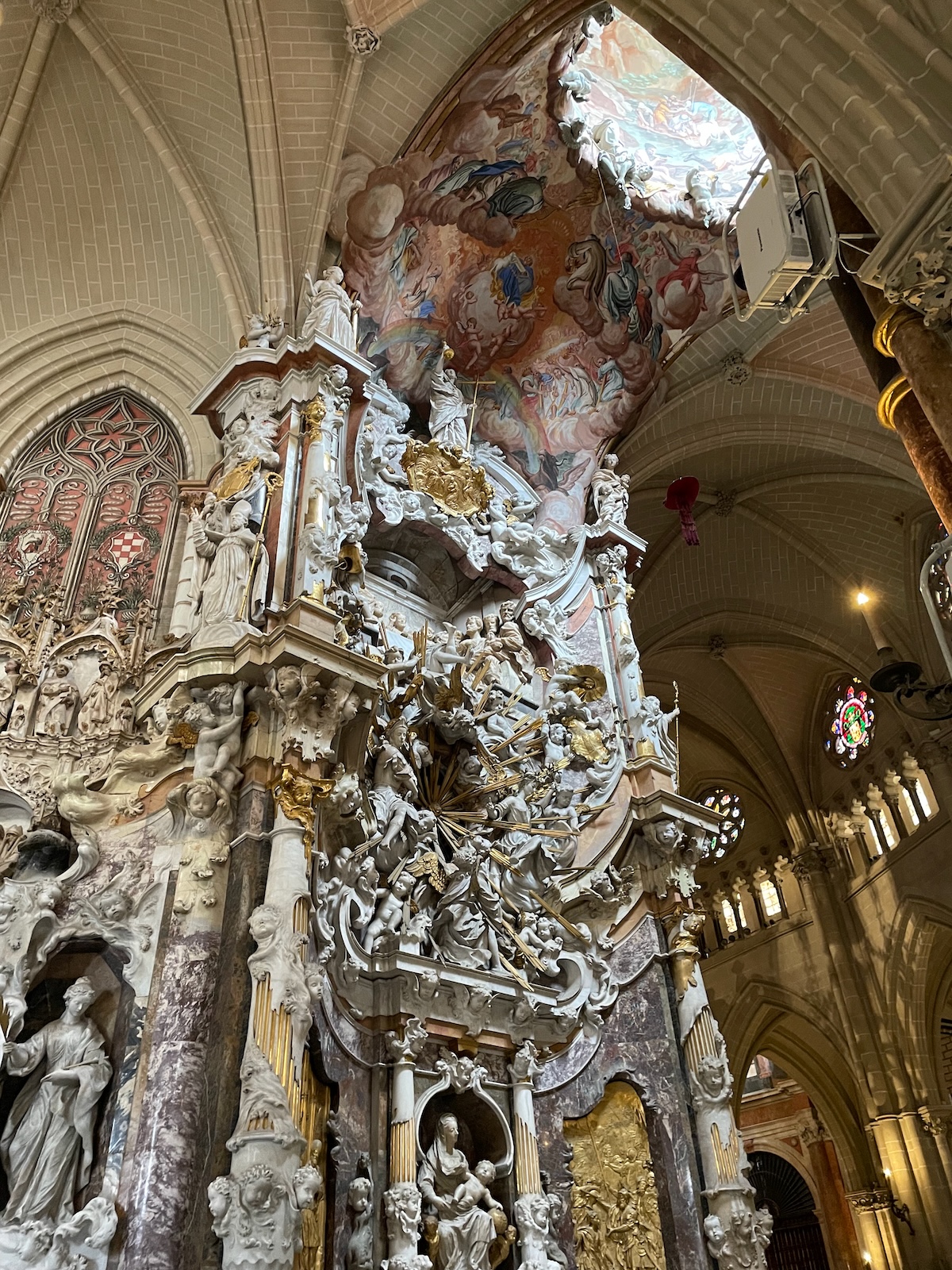
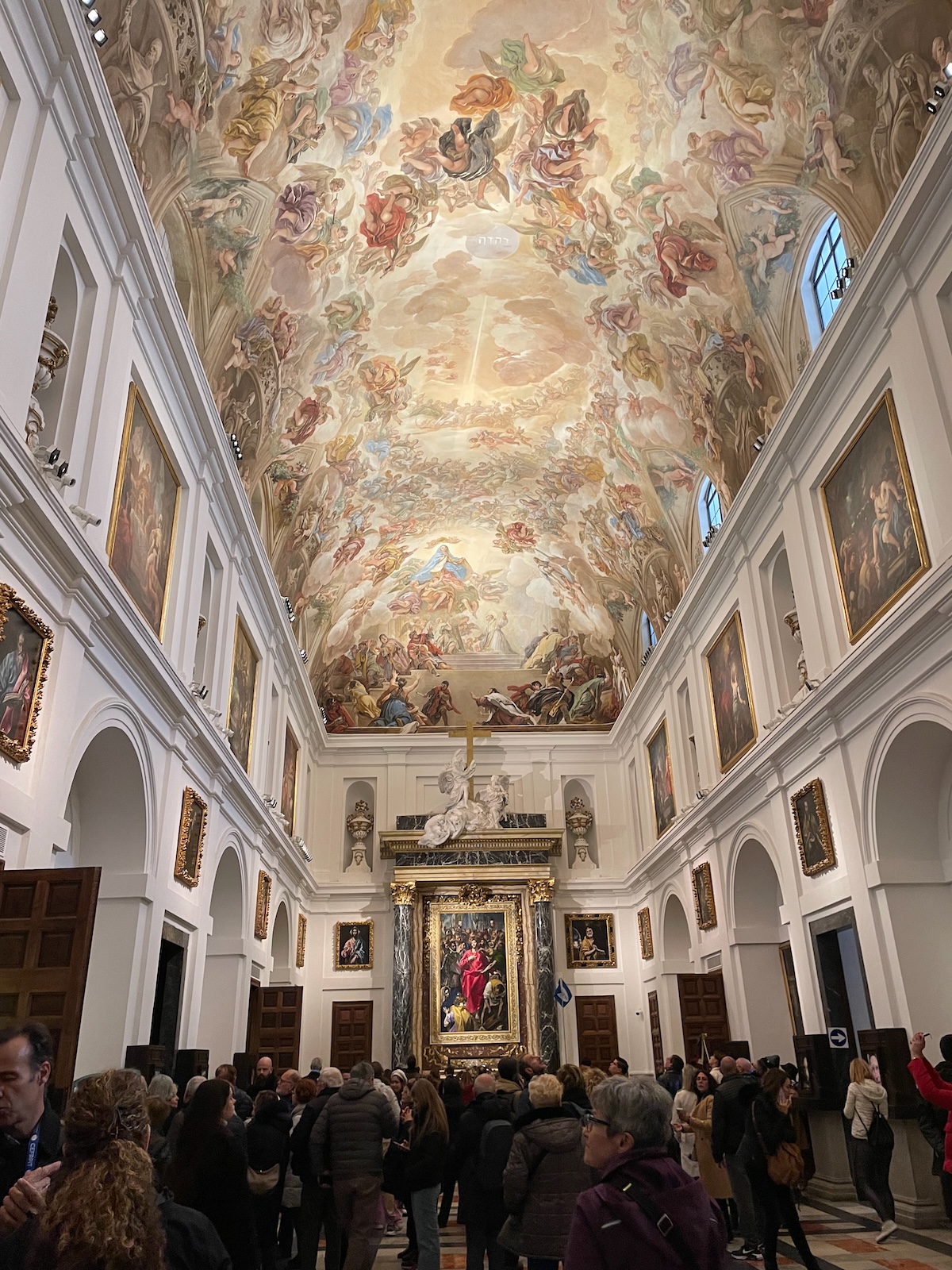
The church is commonly referred to as the Toledo Cathedral, but its full name is The Primatial Cathedral of Saint Mary of Toledo. Its construction began in the year 1226. It is one of the 10 largest cathedrals in Europe. In Spain, only the cathedral in Seville is bigger.

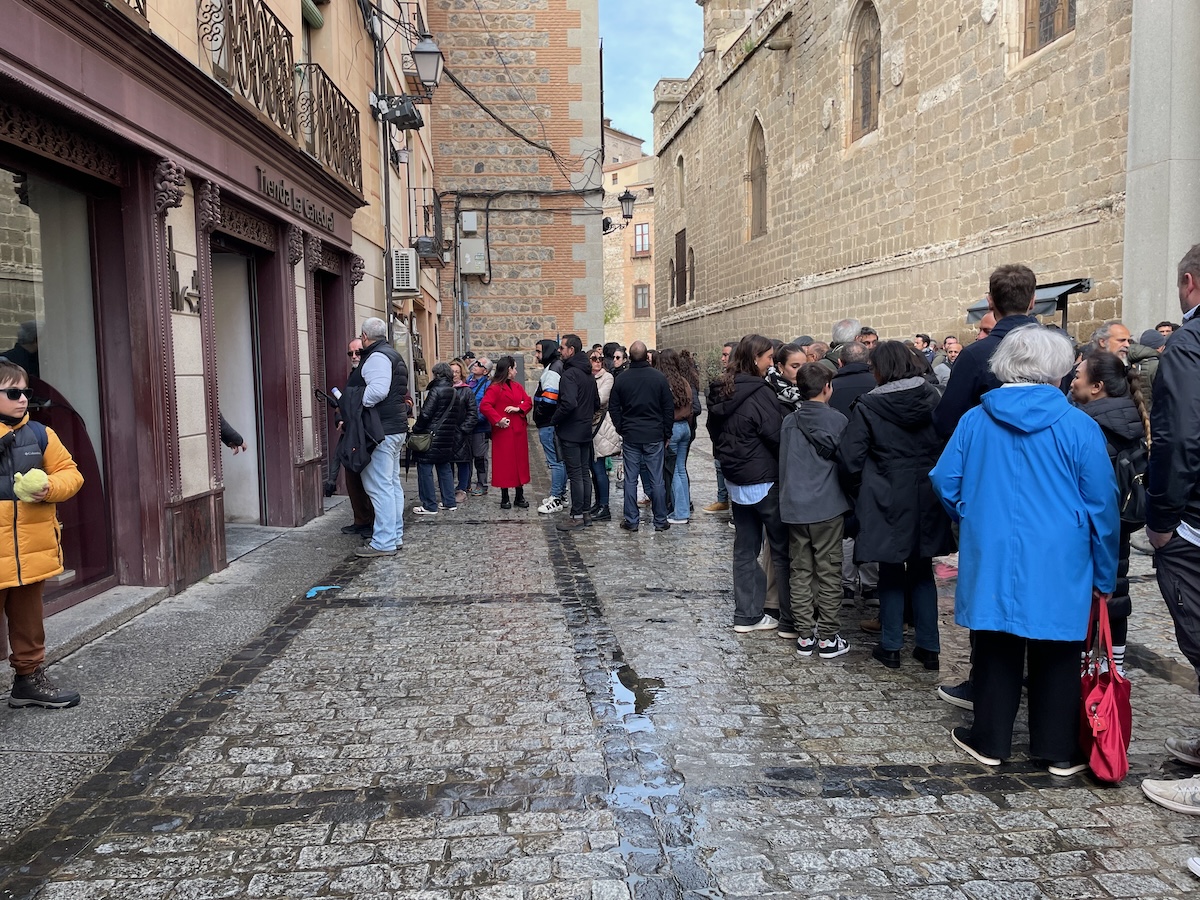

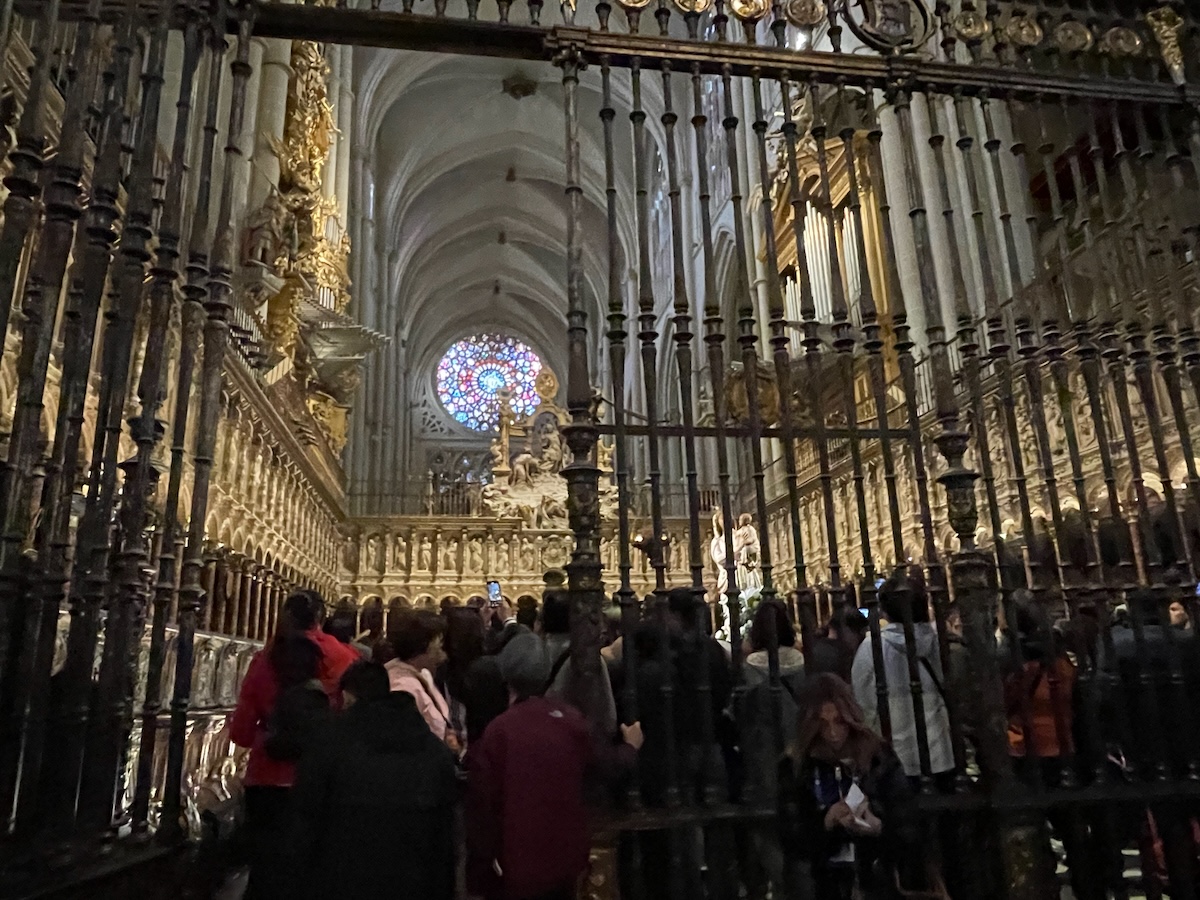
I was planning on taking some photos of the inside, but I decided that I would shoot a quick video as we strolled in to capture the busyness of the place more accurately on this special day. And it was definitely busy.
I am always left with the same uneasy feeling whenever I walk through one of these magnificent edifices. Typically, there is lavish use of gold leaf and silver adorning the many religious structures and artifacts, making them seem far too opulent in my opinion.
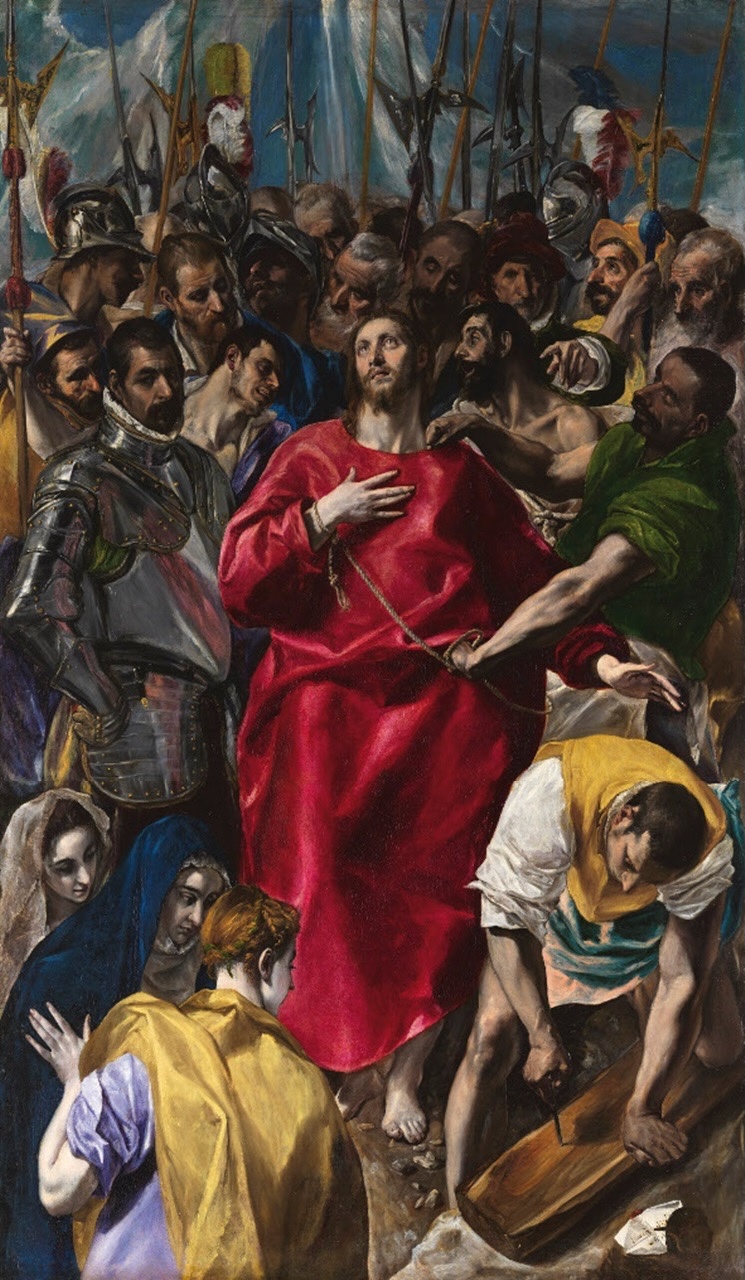
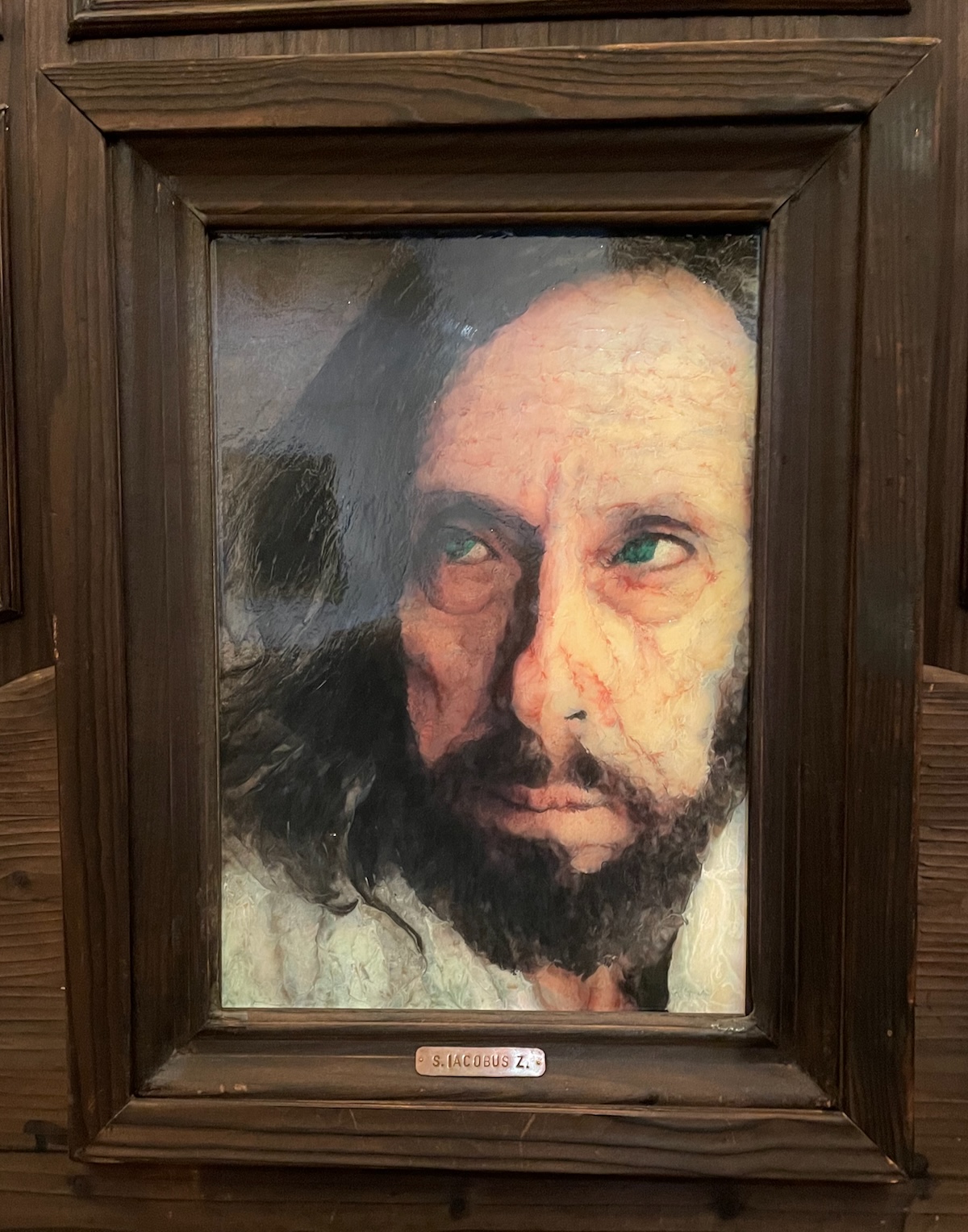
That said, on this visit, I finally got to see El Greco’s great masterpiece “The Disrobing of Christ” in the Sacristy section of the cathedral, which I did not have time to see the last time we were here. El Greco was a resident of Toledo.

Lunch!
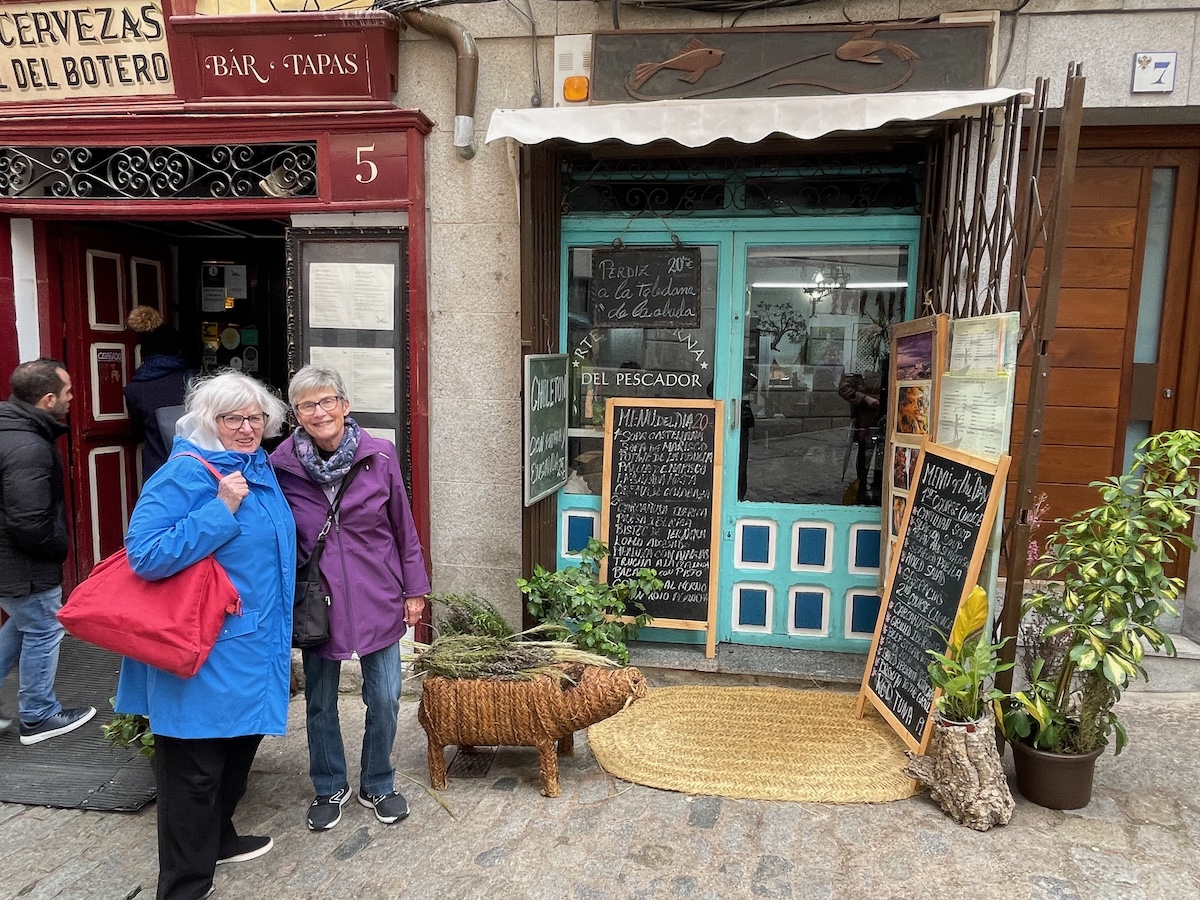
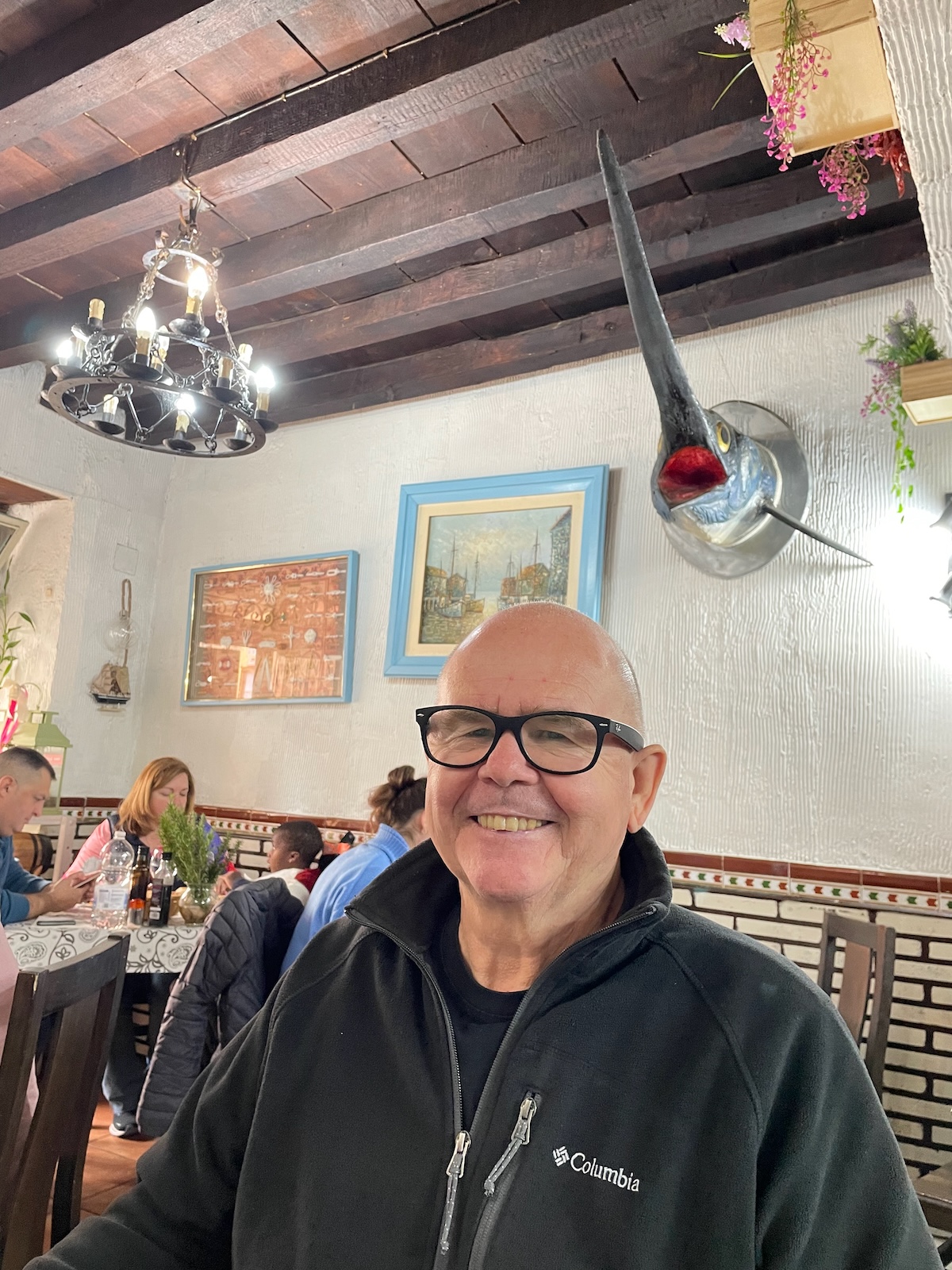
After visiting the cathedral, it was time for lunch. Given that the city was awash in visitors, we had a tough time finding a restaurant to eat at. Our first choice was full, so we headed down to the “Taberna el Botero” where we had eaten before. There was a line up there, so we slipped into a little hole-in-the-wall place next door, La Taberna del Pescador, where we snagged the last table. The food was not as good as what we experienced at El Botero next door, but a fun experience, nonetheless.


In Search of Church Processions
The main attractions during Semana Santa or Holy Week are the various church processions that take place in most of the major towns and cities. The following quote from Wikipedia provides a general overview of what Holy Week and the church processions are about.
“Holy Week in Spain is the annual tribute of the Passion of Jesus Christ celebrated by Catholic religious brotherhoods (Spanish: hermandad) and fraternities that perform penance processions on the streets of almost every Spanish city and town during the Holy Week –the last week of Lent, immediately before Easter.”
Wikipedia identifies Brotherhoods as:
“generally a Christian voluntary association of laypeople created for the purpose of promoting special works of Christian charity or piety, and approved by the Church hierarchy. They are most common among Roman Catholics, Lutherans, Anglicans, and the Western Orthodox.”
Having talked to several people living in Spain over the years about the brotherhoods and the processions, we have the impression that the brotherhoods and the mounting of processions have evolved to be more of a cultural and social activity rather than a pious one.
We have seen church possessions pop up in different locations in Spain throughout our visits at other times of the year. They are certainly not as elaborate and we saw no obvious explanation for why they were taking place, but we have long been intrigued by the concept.
During Holy Week, these possessions, especially in the bigger cities are very elaborate, with hundreds of people in costume, parading with their “Pasos” or floats. They are often accompanied by a marching band,
We were very excited to be in Spain during Semana Santa for the first time this year. And we were certainly looking forward to seeing some of these amazing processions. Unfortunately, because of the weeklong rainfall… Incredibly unusual… most of the processions we attempted to see in Marbella and Toledo got rained out. Sheesh! But I will do my best to show you what we did see and what some other friends managed to see.

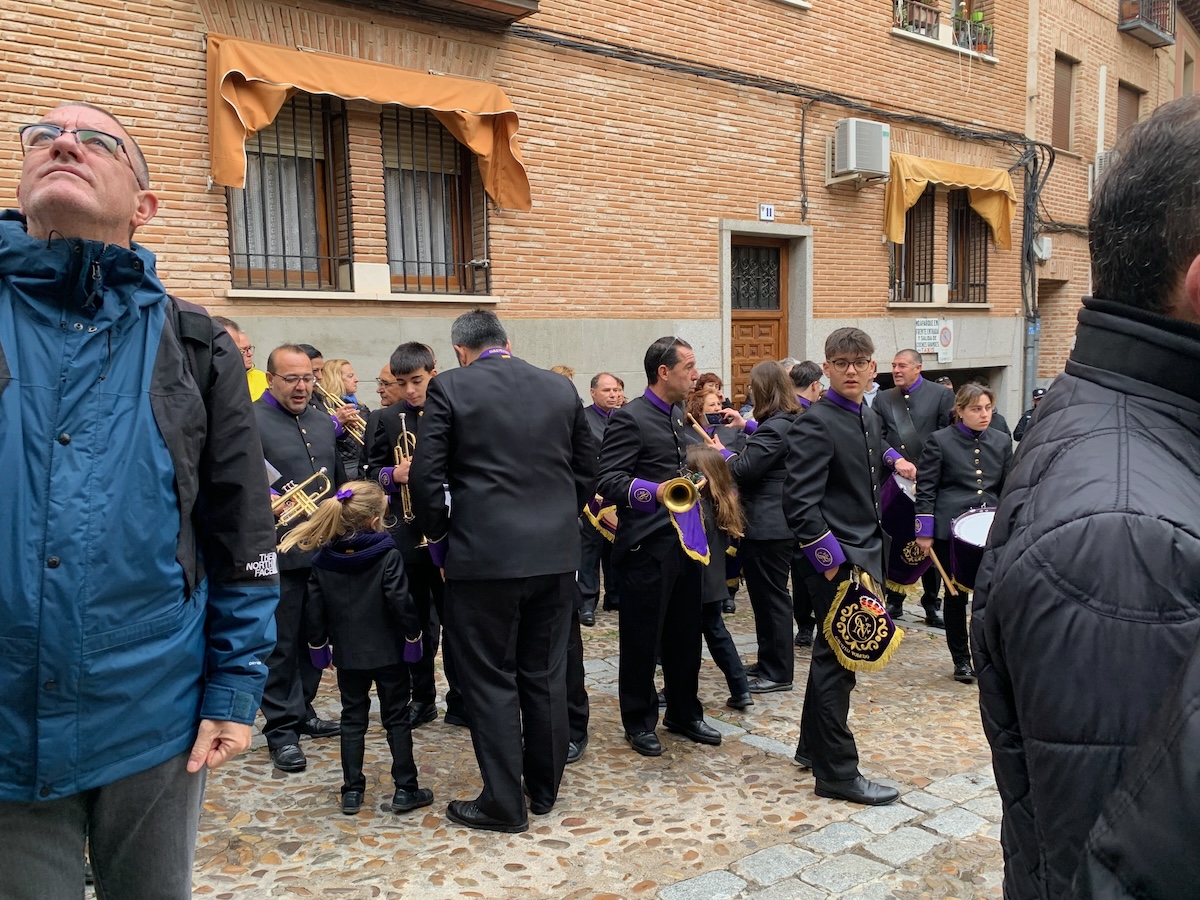
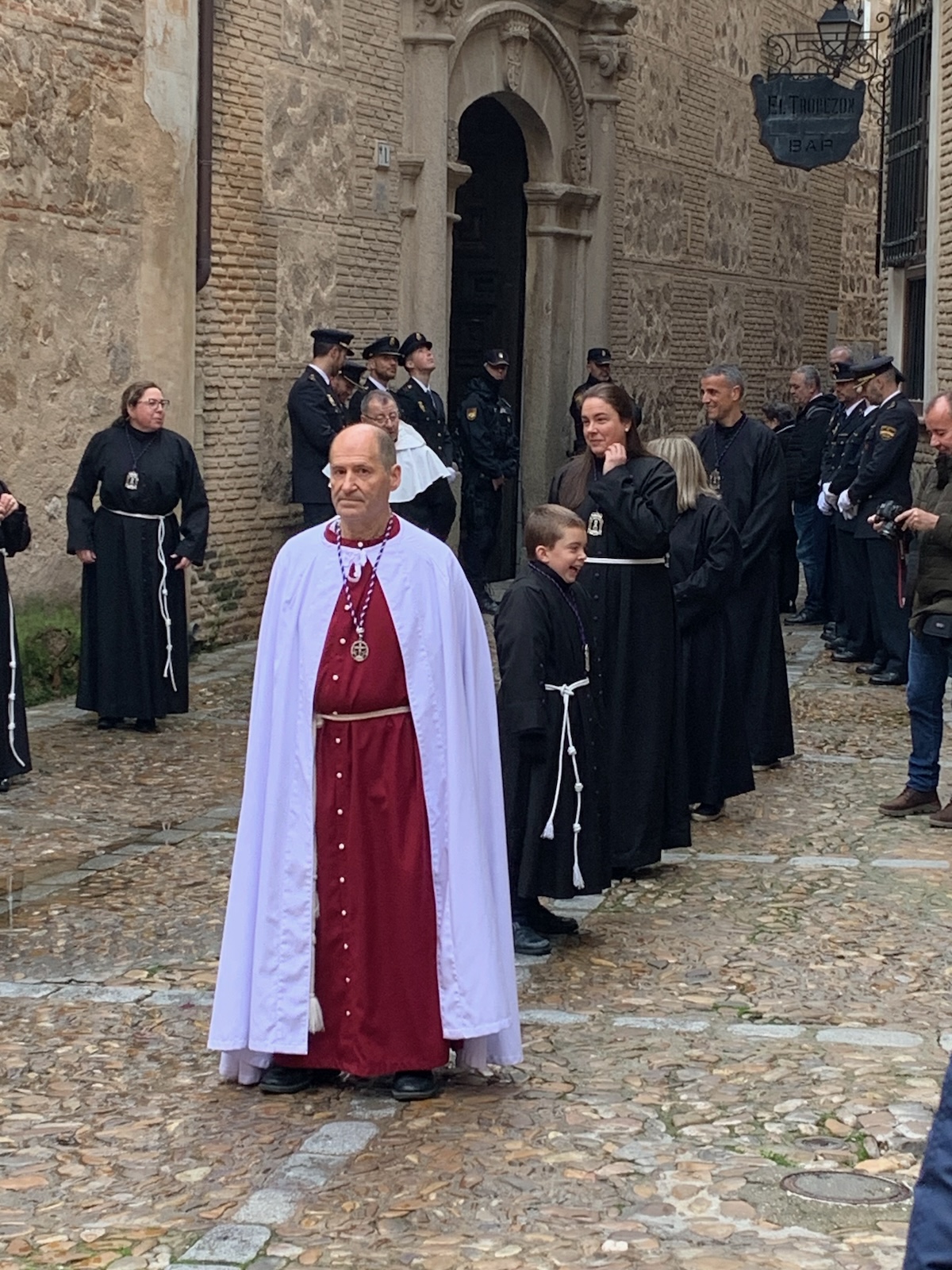
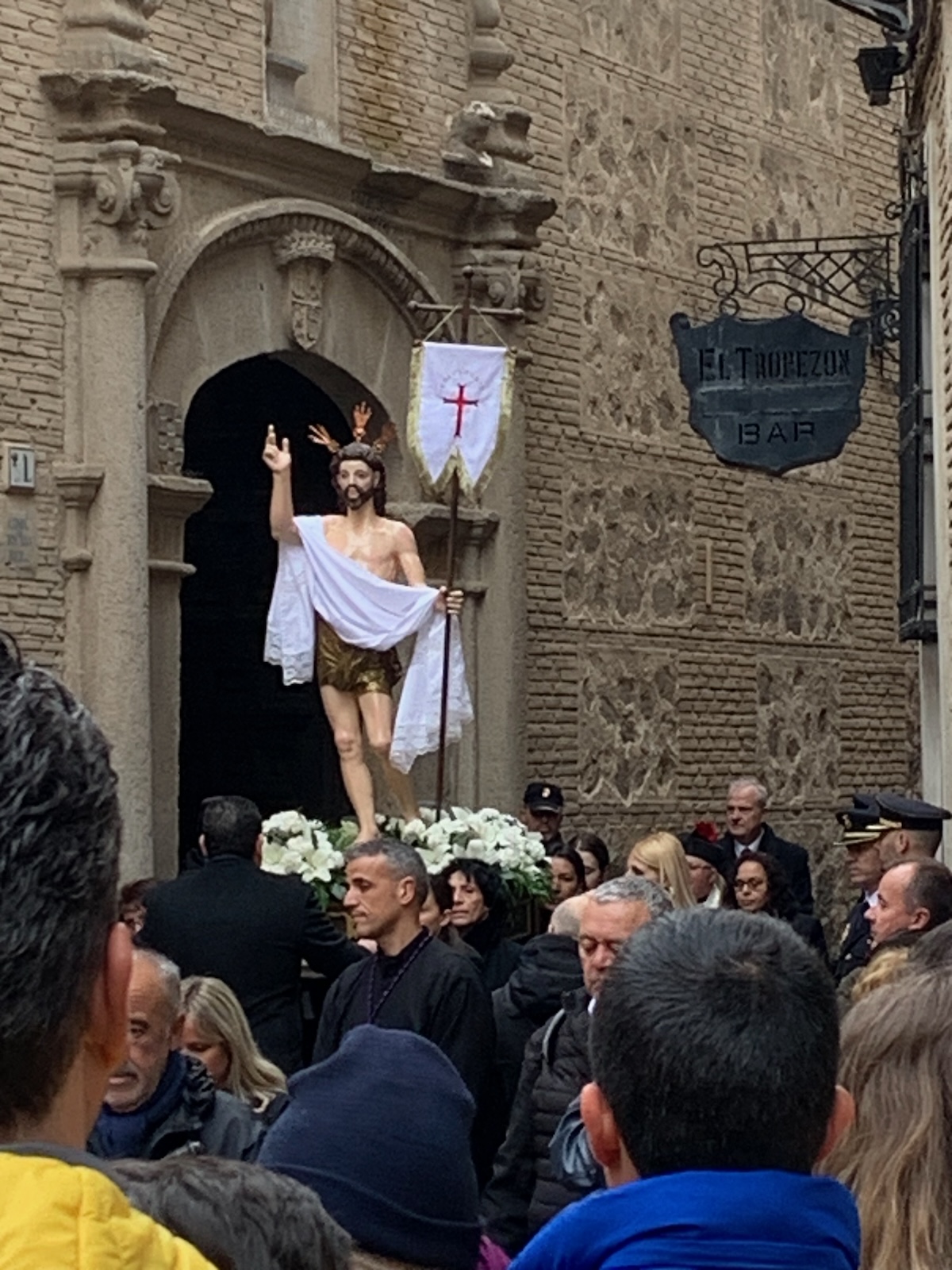
The Love-Goddess shot a couple of video clips. In this one, you have a better view of the women caring the Paso and of the solemnity of the occasion.
As it turned out, I too got to see a small parade. After a few minutes of sitting alone in the apartment, I heard another band performing up the street near the front entrance to the Cathedral. The parade had disappeared down the hill by the time I got there, so I tore after it in hot pursuit… just in time to see it head up another street and turn a corner. I managed to shoot a short video clip myself. I. Did. Not. Get. Shutout! 🙂
Processions That Did Happen
Fortunately, not everybody had the same bad luck we had during the week. Friends, Marielle in Nerja and Heather in Malaga, did manage to see some very impressive processions between the rainfalls. They have graciously allowed me to share their photos with you here.
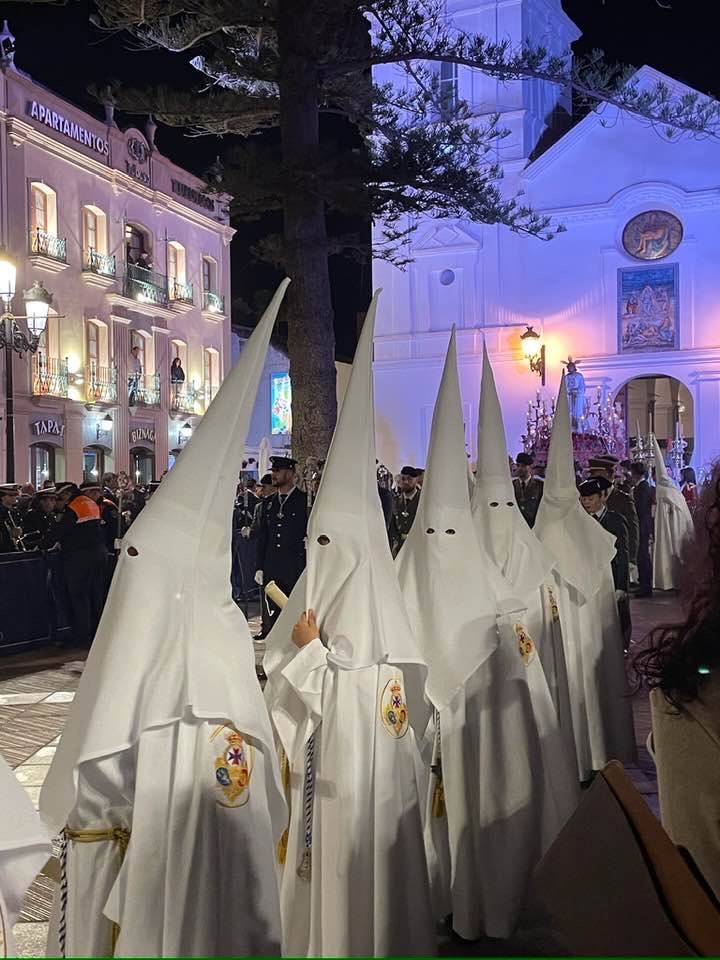


Heather also managed to shoot this beautiful video of a Paso coming around the corner into view. It captures the sense of what these processions are all about. And, she had the good common sense to shoot the video in horizontal view and ended up with a great shot. Unlike my videos shot in vertical view, which are tiny and a whole lot less interesting. 🙂
.
Off To Madrid
The search for church processions ended, it was time to pack up and head up to Madrid. We experienced a fair amount of drama in getting a cab. I called for one using my limited Spanish. At the appointed pick-up time a cab appeared up the street… but it was commandeered by another group. It was clearly meant for us because no other cab appeared.
After waiting for 15 minutes, I called again but the listener could not decipher my request because he assumed a cab had been sent already. Fortunately, a friendly shopkeeper took my phone and explained the situation and a new cab was immediately dispatched. The Love-goddess went into his shop while we waited and bought a couple of items … a Spanish quid pro quo. We arrived at the train station in plenty of time to catch our 12:30 train to Madrid.


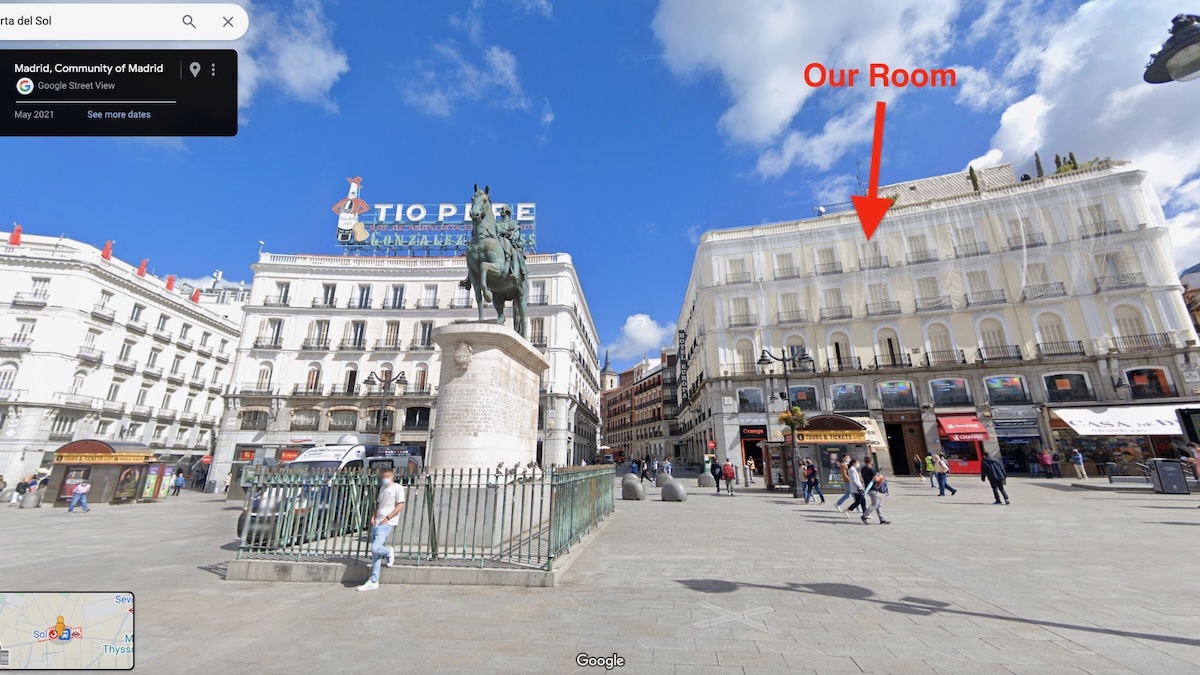
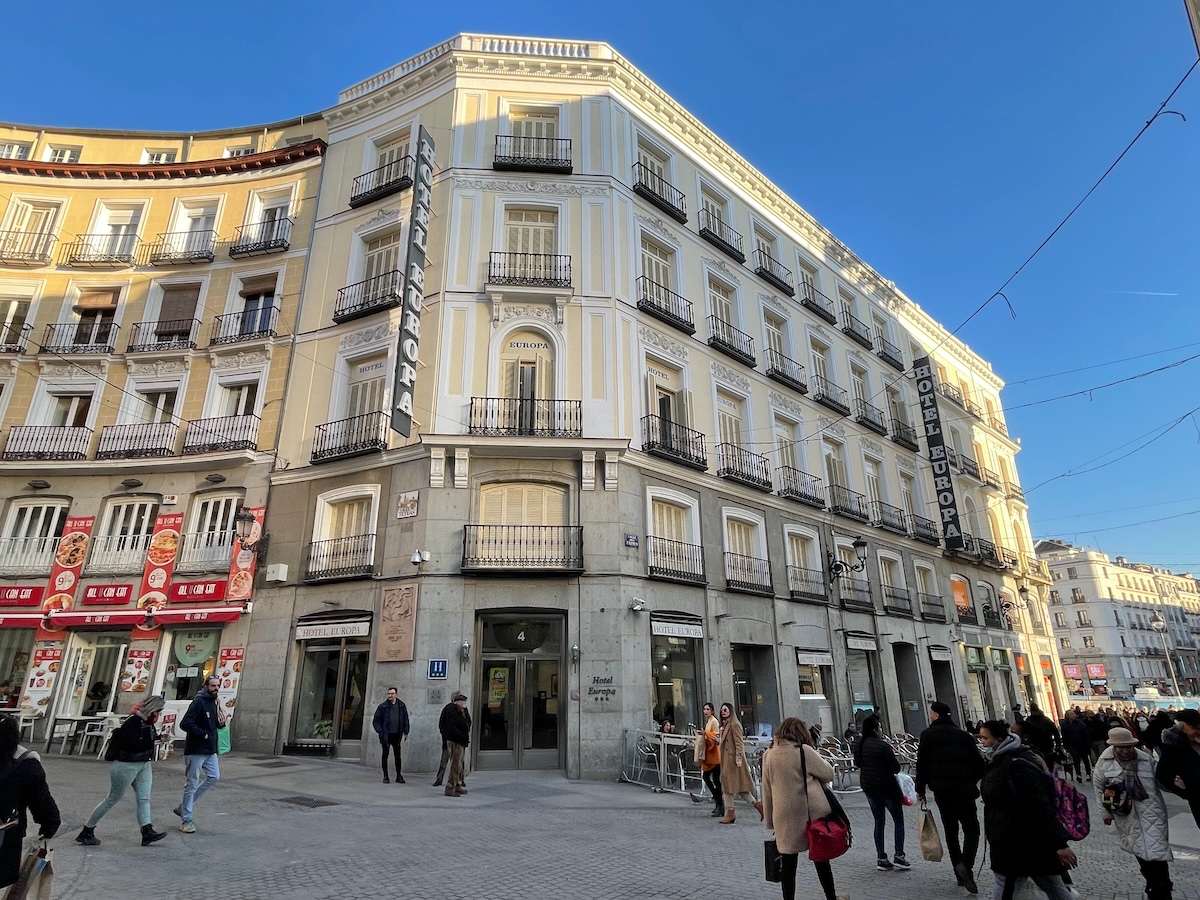
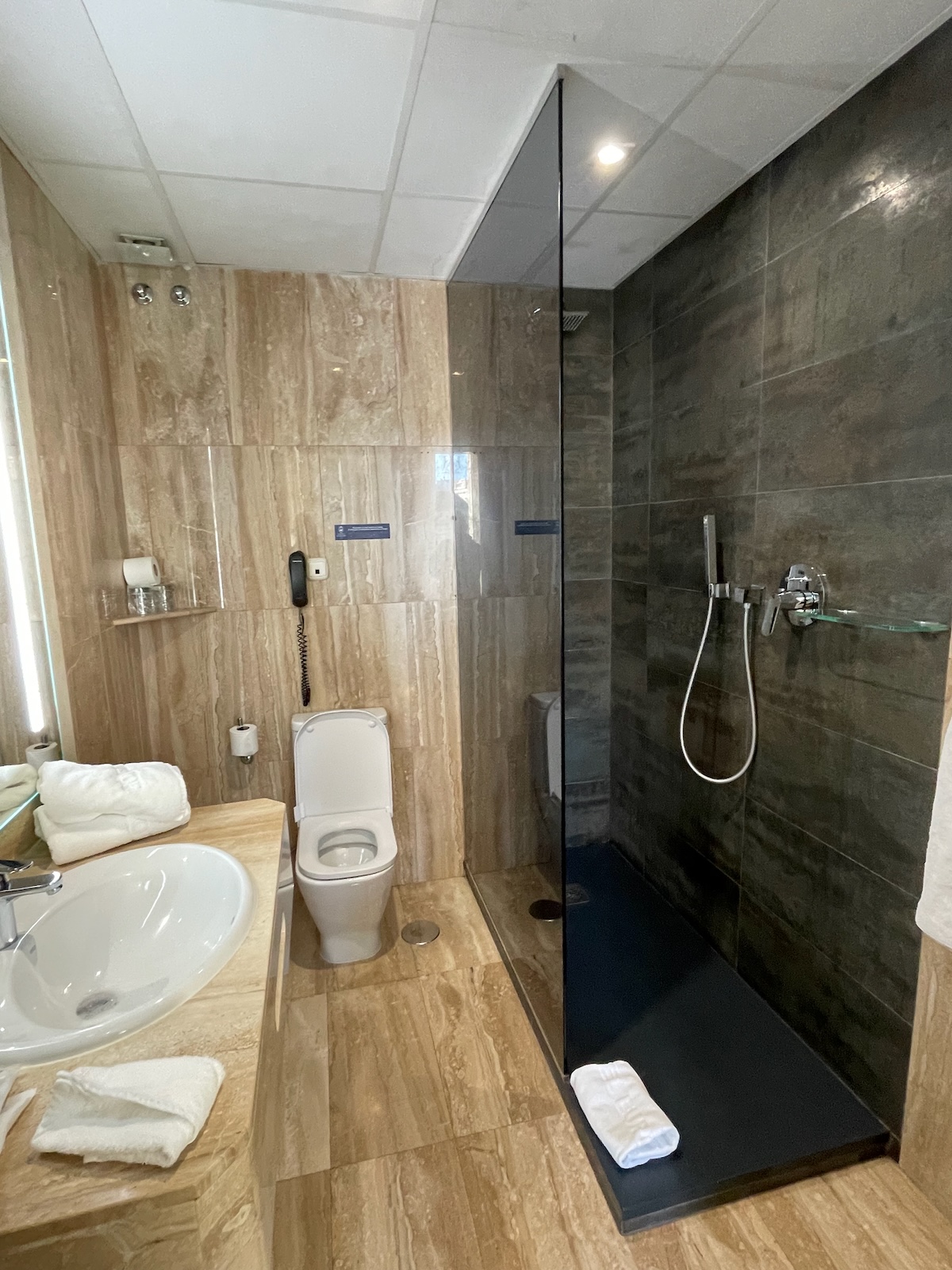
After arriving at Atocha station in Madrid, we hopped into a taxi and headed off to our hotel, the Hotel Europa Madrid on the Puerta del Sol. We have stayed at this hotel a few times and it has become our go-to Madrid stay.
Because it is on the Puerta del Sol, taxis are frequently unable to take you directly to the hotel because of vehicle restrictions that exist for most of the day. Usually, they can only drop you off or pick you up at the front door in the morning when the area is opened up so delivery trucks and other service vehicles can directly access the area.
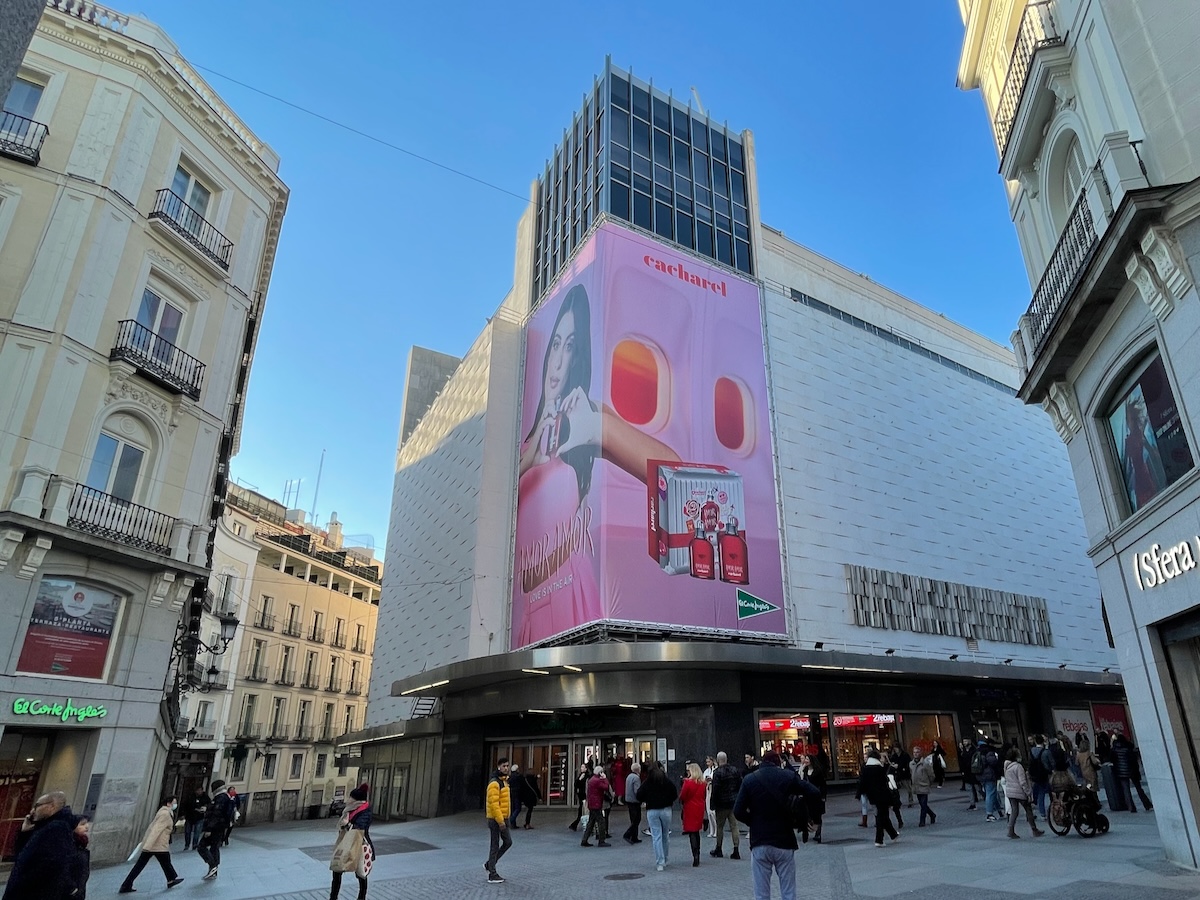
Not being dropped off right at the hotel is no biggie. Taxis will let you off somewhere around the perimeter of the Puerto del Sol and you will simply have to walk across it to your hotel. The images in the following photo gallery will give you a sense of what that is all about.
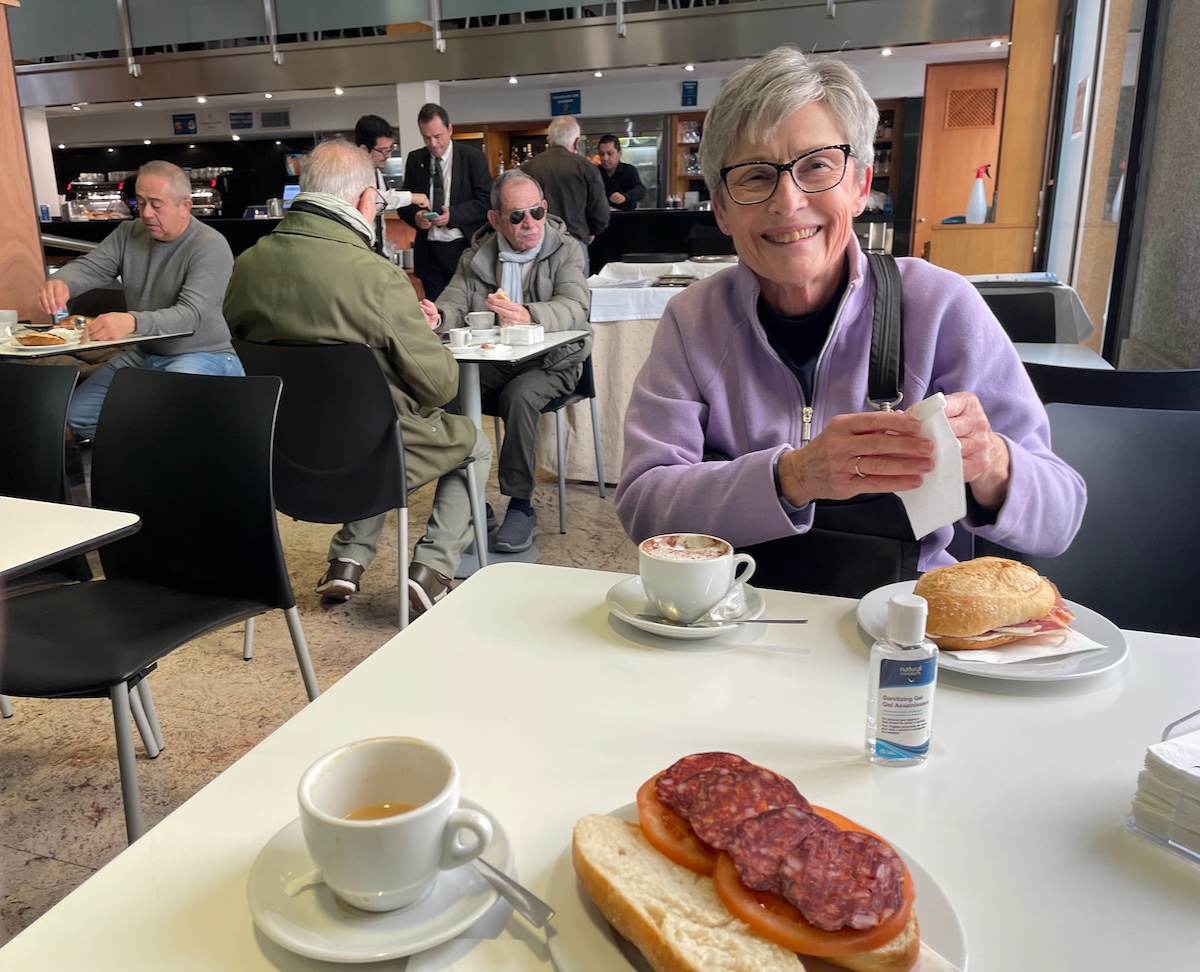
When we are on the road, we rarely eat in the restaurants situated in our hotels. But we definitely make an exception here. The hotel’s Café Europa is a great little classic Spanish eatery, mostly frequented by locals. It even has a lovely patio on which to sit on sunny days. It is perfect for people-watching and for checking out what’s going on in the Puerta.

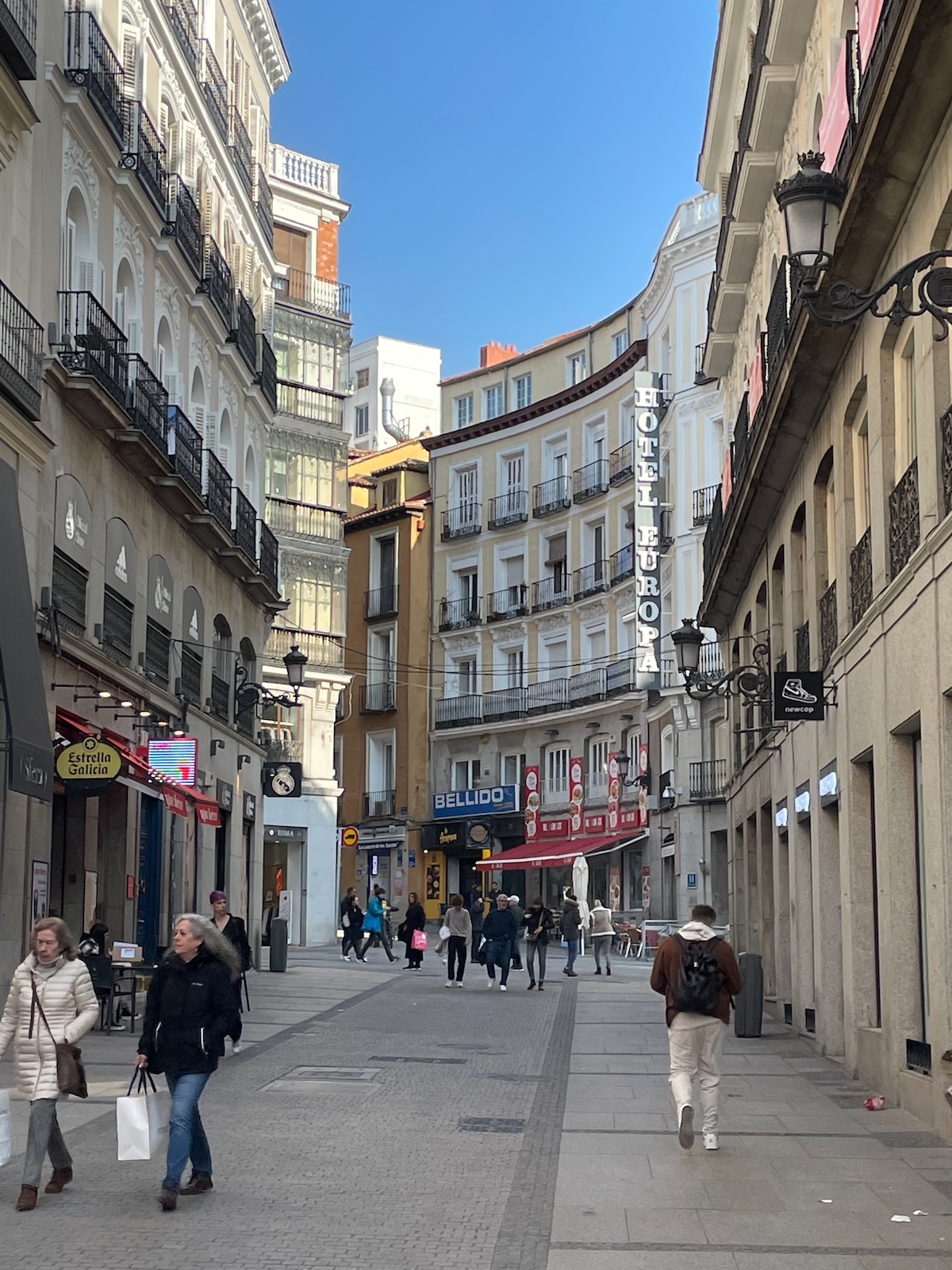
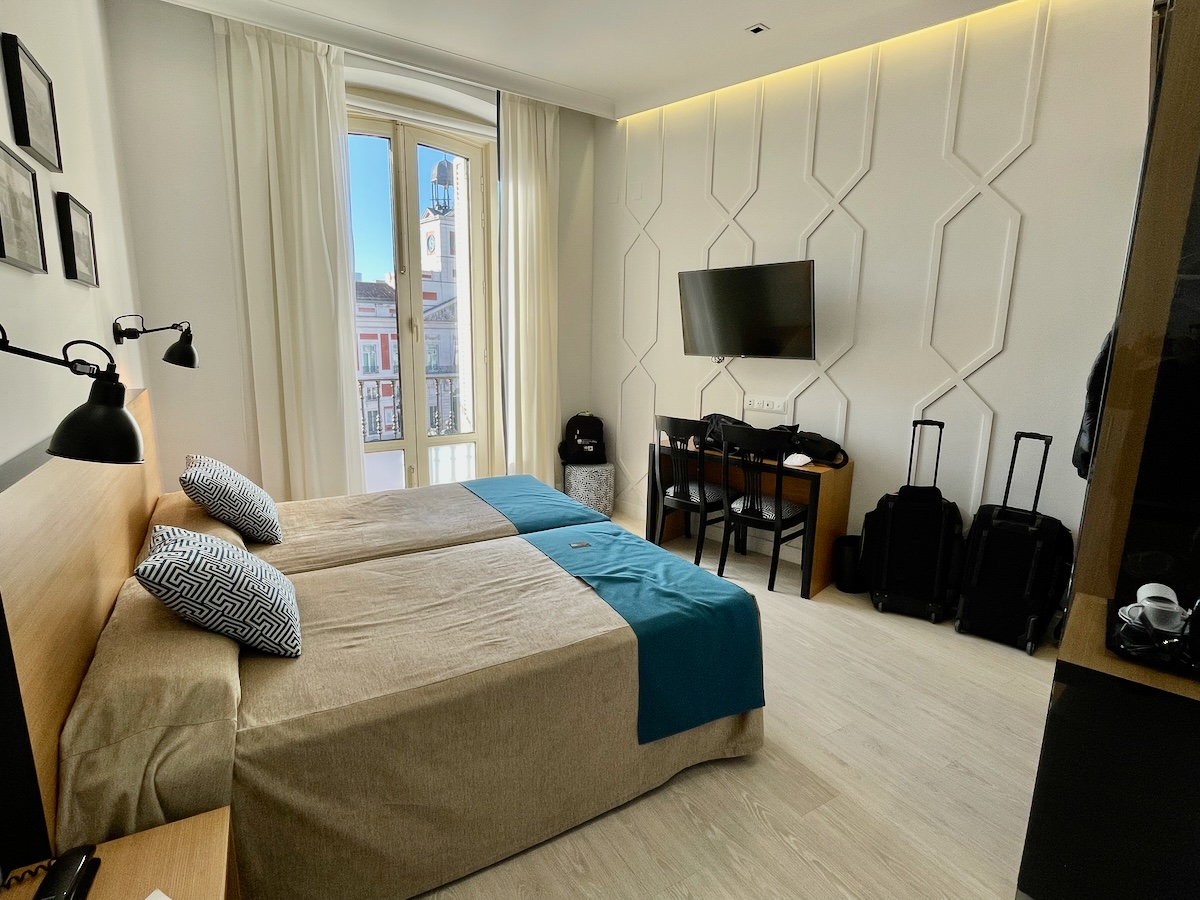

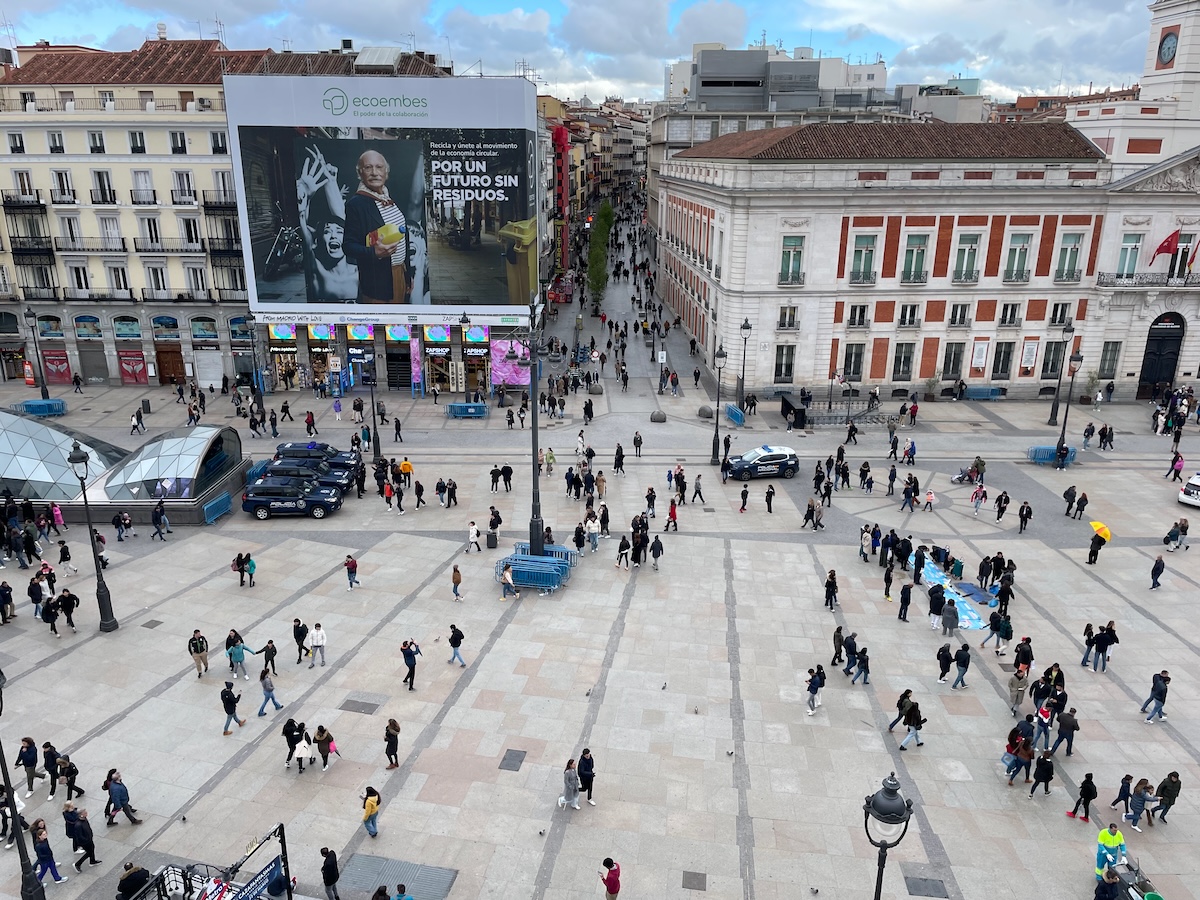
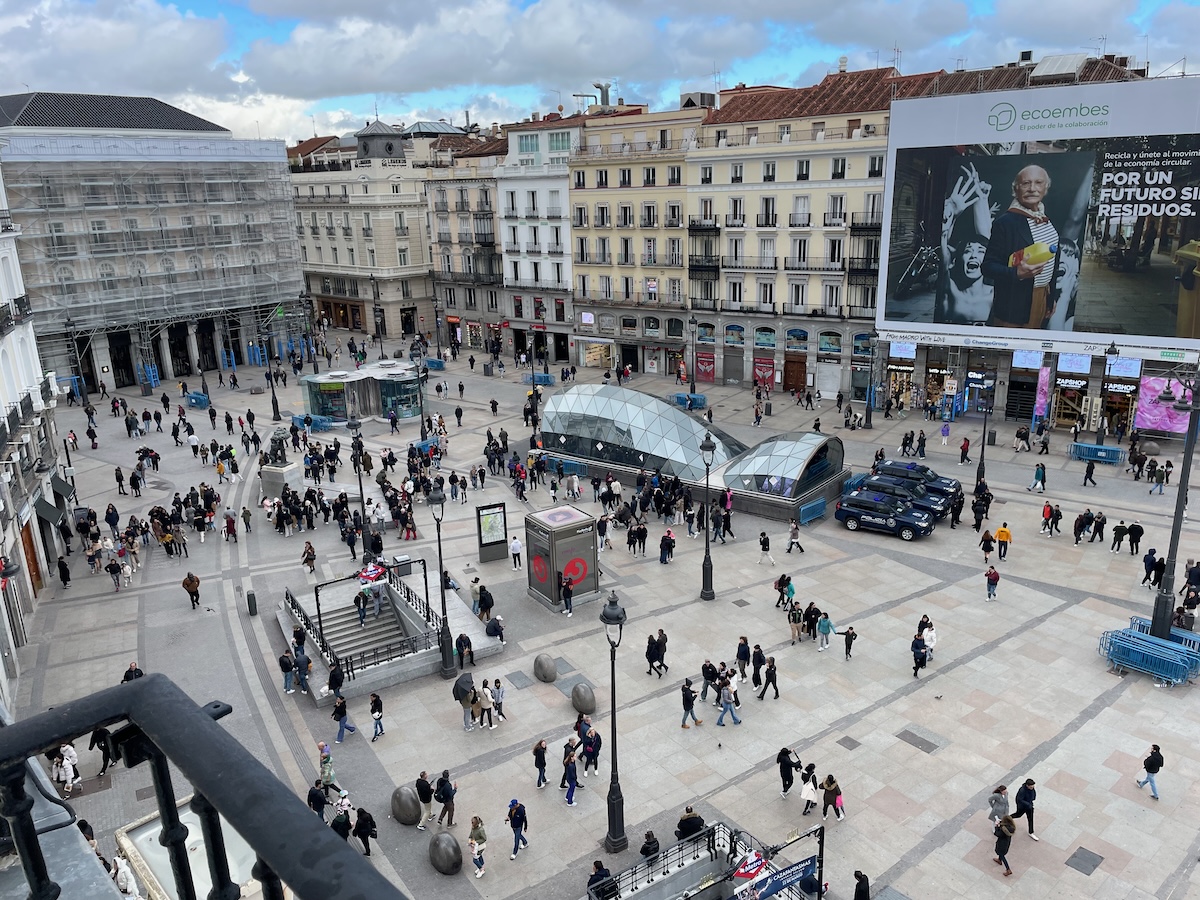

Just staying on the Puerta is often highly entertaining. It seems like the most sought-after location for protesters to gather to deliver their message in Madrid’s most public place. Last year when we were here, we got to watch nurses and doctors protest the privatization of public healthcare and listen to the Communist Party of Spain do their thing, including the singing of “Solidarity Forever “in Spanish. 🙂
During this stay, there was a group of people sporting Papier Mâché fish heads, protesting the eating of all sea life???? Bit of a head-scratcher.