

*Updated December 14, 2022 to include international charge card information.
Boomers! Remember when we were all hitchhiking around Europe and other far-off places in the 1960s and 1970s? Think back to what most of us did to have money available. There were no such things as ATMs, and no real way of accessing any funds you might have in a bank account at home. I’m pretty sure that you, like me, packed up a bunch of American Express cheques to cash as you traveled. Ah, the good old days.
And do you remember as soon as you crossed the border… especially in Europe… you immediately had to go to a currency exchange kiosk and exchange your leftover funds from one country for the new one. And this was not made easy. I recall having to flash the passport and sign documents each and every time I wanted to cash an Amex check or exchange money; usually after spending an inordinate amount of time searching for a location.
The hunt for money was all part of the experience at the time, and we generally took it all in stride. Still, through it all we probably did not give a lot of thought to whether we were getting our money exchanged at a favourable rate.
The answer to that question was.… No… We were getting hosed on every single exchange. Every time we bought a cheque, or cashed a cheque, or exchanged money, someone was making a small amount for handling the transaction and we were losing a small amount each and every time.
I have to tell you; things have not changed all that much. Yes, it is easier to get money while we are traveling. You can walk up to virtually any ATM in the world and yank money out of your chequing account at home. Or you can wander into the great proliferation of currency exchange kiosks all over the world and exchange money from whatever country of origin you are from, or from whatever country you just visited. But we are still getting hosed on every transaction.
Not only are we getting hosed, we are getting hosed in very creative new ways. Your financial travel goal should become, “how do I ensure that ‘they’ are extracting as little of my money in fees as possible?”
This article is meant to provide you with some insights on how our money is being syphoned off through various financial institutions or companies as we navigate turning our money into local money. And how to turn the faucet down, so the drain is just the absolutely necessary trickle.
I am going to be using Europe and Euros as my ongoing example in this article, simply because we will be heading over there soon. But what I have to say, really applies to most places in the world.
 You Don’t Need to Take Cash with You

First off, you don’t need to load up on foreign currency at a currency exchange office, or your bank of choice, in your hometown before you leave the country. They will certainly tag you for as much in fees as you will get hit up for in a foreign country.
And don’t go checking to see if you can still buy travelers checks… I’m sure you can, because it is probably still a good way for financial institutions to pick up a few stray dollars. Getting cash in local currency wherever you are is just as easy as it is in Canada. You just walk up to an ATM, stick in your debit card, and “Bob’s your uncle”.
Having said that, let me add a bit of a caveat. I do like to have a little bit of the currency I’m going to need in my pocket when I land. If at the end of a trip in a place in the world I know I am going to go back to, I will try and bring home some currency with me so that I have it immediately on hand for the next trip. Let me explain why.
We have travelled wide and far and very occasionally we’ve been hit with an unexpected drama immediately upon arrival. The last time we flew into Madrid, we discovered that all the taxi drivers were on strike, and we ended up having to figure out the bus system to our hotel. When I arrive in a foreign country, I don’t want the potential “surprise” to be that all the bank machines are down, and I can’t get local money to pay for a taxi to our hotel. Arriving in Europe with €100 in your pocket is not a bad thing.
But You do Need Cash
At home, we are used to paying for virtually everything with our debit cards, or our charge cards, no matter how big or small the amount. Such is not the case in other parts of the world.
Even in Europe, cash is still heavily favoured for most day-to-day transactions. You will find this particularly true in restaurants and small businesses. Yes, you will be walking around with more money in your pockets, but that is not an issue as long as you are paying attention to the most basic ways to prevent pickpockets from relieving you of your cash without you knowing.
So, you do not load up with foreign cash before you leave home, but in order to make all the cash payments that will be required of you, AND if you want to minimize the currency exchange rate, and other fees, involved in most financial transactions abroad, you will definitely need a way to turn your financial resources at home into local cash in a cost effective manner.
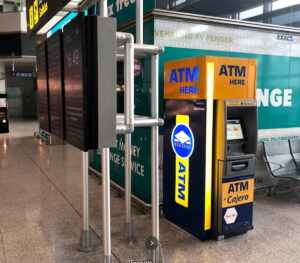 The ATM… Is the Answer

What it all boils down to is that getting cash out of an ATM is your best means for getting money… and for getting it in the very cheapest way possible.
We have been doing this for years. Whenever we get to Europe, the very first thing we do is find an ATM in the airport and we withdraw some cash. We started doing this after listening to Rick Steves offer this up as a smart thing to do. He has long been a proponent of using cash to pay for most of your purchases in Europe and getting that cash out of local ATMs. I would like to think that a guy who has spent several months a year in Europe for over decades would have it all figured out.
To quote from Rick’s great ATM tips article…
“An ATM will normally give you a better exchange rate than you’d get if you were buying foreign currency with cash or traveler’s checks, since the exchange is made at the interbank wholesale rate. “
The “Interbank Wholesale Rate” is absolutely the best you can do when converting your own currency into… in this case euros. But what about fees? You will still get tagged for fees by the financial institution operating the ATM you are using and probably by your own bank at home for making the withdrawal from your Canadian account. And those fees can either be a percentage of the withdrawal or a flat rate… It varies.
So, the second thing you need to be aware of when using ATMs abroad is how to minimize those fees. The easiest way to accomplish that is to make fewer transactions by taking out large quantities of cash instead of making many small withdrawals. Typically, we will take €500 out of an ATM at a time. As I write this that is worth about C$700.
Additionally, be aware of what your bank charges you to undertake international transactions on your debit card. For example, we get two free international transactions per month, but after that, we pay $5.00 per withdrawal. If we can get away with making only two withdrawals in a month, we don’t get charged anything. Some Canadian banks do offer unlimited free international debit withdrawals under certain banking plans.
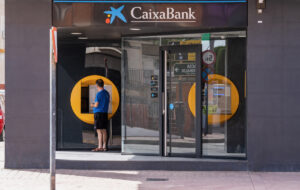 Not all ATMs… or Banks… are Created Equal

It also matters whose machines you choose to draw your funds from. As a rule, it is best to go to a local bank’s ATM rather than to one operated by a business (e.g. Euronet in Europe). The private companies that operate these machines tend to charge much higher fees than the banks. You may have experienced this in Canada when using a machine that is clearly not operated by a financial institution.
Even the foreign banks tend to charge different rates for individuals using a foreign debit card to access their personal accounts on their machines. This caught my attention this past winter when I got cash out of a Santander Bank ATM in Spain. They were clearly charging way more than any other bank that I had withdrawn cash through previously. It was an eye-opener.
To get a handle on which banks’ ATMs are the most cost effective to use, you should do a quick Google search and find out what these local banks are charging foreigners to use their ATMs. I did this recently in preparation for our return to Spain this winter and discovered that there was a wide range in the fees charged amongst Spanish banks. The following are a few examples itemized on a website I found that addressed that question:
ING: no fees
Unicaja Banco: no fees
BBVA: no fees
CaixaBank: no fees – €2.00
Sabadell: €1.80 – €5.00
Cajamar: €1.85 – €2.00
Santander: €2.00 – €8.00
We always make a point of seeking out bank ATMs at an actual bank whenever possible. Our thinking is the people around us are not paying attention to what we are doing because everyone is there to make some sort of financial transaction.
You will notice that there are frequently other ATMs located close to these banks … often operated by private companies. I suppose the idea is if you get bored with waiting in line at the bank ATM, you may just slip over and use one that doesn’t have a big lineup.
There is no more risk when using a foreign bank’s ATM than there is using one at home. Yes, you do have to be mindful as you do here for criminals, who might be “shoulder surfing” in hopes of identifying someone’s pin for a card that they will later attempt to steal. But you are no more at risk of being robbed then you would be at home. European criminals do use “card skimmers” on ATMs just like they do in North America, so it’s not a bad idea to make sure the device you are using looks and feels authentic.
When we do a cash withdrawal, both of us usually go, and one of us provides a mindful buffer for the other during the process.
Foreign Currency Conversion Kiosks
It is tempting to stroll up to currency conversion kiosk in an airport as you are disembarking and exchange a bunch of Canadian money for foreign currency. But don’t do it. You are taking an unnecessary financial hit simply for the convenience. Hang onto those Canadian dollars that are burning a hole in your pocket until you get home.
And, as I mentioned, don’t make a currency exchange before you leave home at either your bank or at an exchange office eithert. BUT, after making that pronouncement, I offer up a possible exception.
The possible exception involves exchanging one foreign currency for another. I did this recently, and it made a whole lot of sense. Like many Canadians, we used to go to the United States with some regularity. Florida was our destination for winter getaways before we switched and started going to Spain. And I typically go on at least one US golf getaway during the winter… not since the beginning of the pandemic, of course.
The net result of all that is that we had a US dollar bank account in which we kept US dollars as a hedge against currency fluctuations to finance these travels. Because we no longer winter in Florida or have any interest in travelling to the US for that matter, those funds had become “dead money”.
Recently, I took some of that “dead money” to a local currency exchange bureau and exchanged some US dollars for Euros. Part of the rationale for doing that was that the US dollar is trading strongly against the euro, and we ended up getting a much more favourable exchange rate that we would have if we had exchanged Canadian dollars. Interestingly, it was our banker who told us to go there rather than doing the exchange at his bank… because they offered much better rates.
Dynamic Currency Conversion – “Danger Will Robinson, Danger”
A whole new way for financial institutions to milk you with additional fees has developed through a relatively new service called “dynamic currency conversion”. I had an experience with this very recently that I will share with you. It occurred as I went through the process of booking a hotel in Madrid for later this winter.
Basically, the concept involves the organization doing the financial transaction offering you the opportunity to immediately strike that transaction in your own currency rather than the foreign one. I suppose the idea is that if someone sees a precise dollar charge or amount that is the final amount involved in the currency exchange they might think that’s it is a good idea to firm up that number right away, rather than waiting to see what their own bank decides the amount will be. However, you will always be paying more than what it will end up being from your bank.

Let’s look at my recent example. In the image above you can see that my immediate payment for one night’s stay at the hotel… the condition of booking for five nights… was offered to me for either €119.70, euros or $176.44 Canadian. Needless to say, I chose to pay in euros. When the transaction was completed by MasterCard, the converted cost was $170.87. I saved over five dollars in fees by not taking the bait.
You will encounter “dynamic currency conversion” in many places as you travel. They can pop up when making an online credit card purchase as in my example, or when doing a debit cash withdrawal from an ATM, or at a store where you are making a credit card or debit card purchase. Always choose to pay in the local currency.
Rick Steves provides a bit of a comment on the process…
“Some ATM machines also offer DCC, often in purposefully confusing or misleading terms. If an ATM offers to “lock in” or “guarantee” your conversion rate, choose ‘proceed without conversion.’ Other prompts might state, ‘You can be charged in dollars: Press YES for dollars, NO for euros.’ Always choose the local currency.”
 Charge Cards
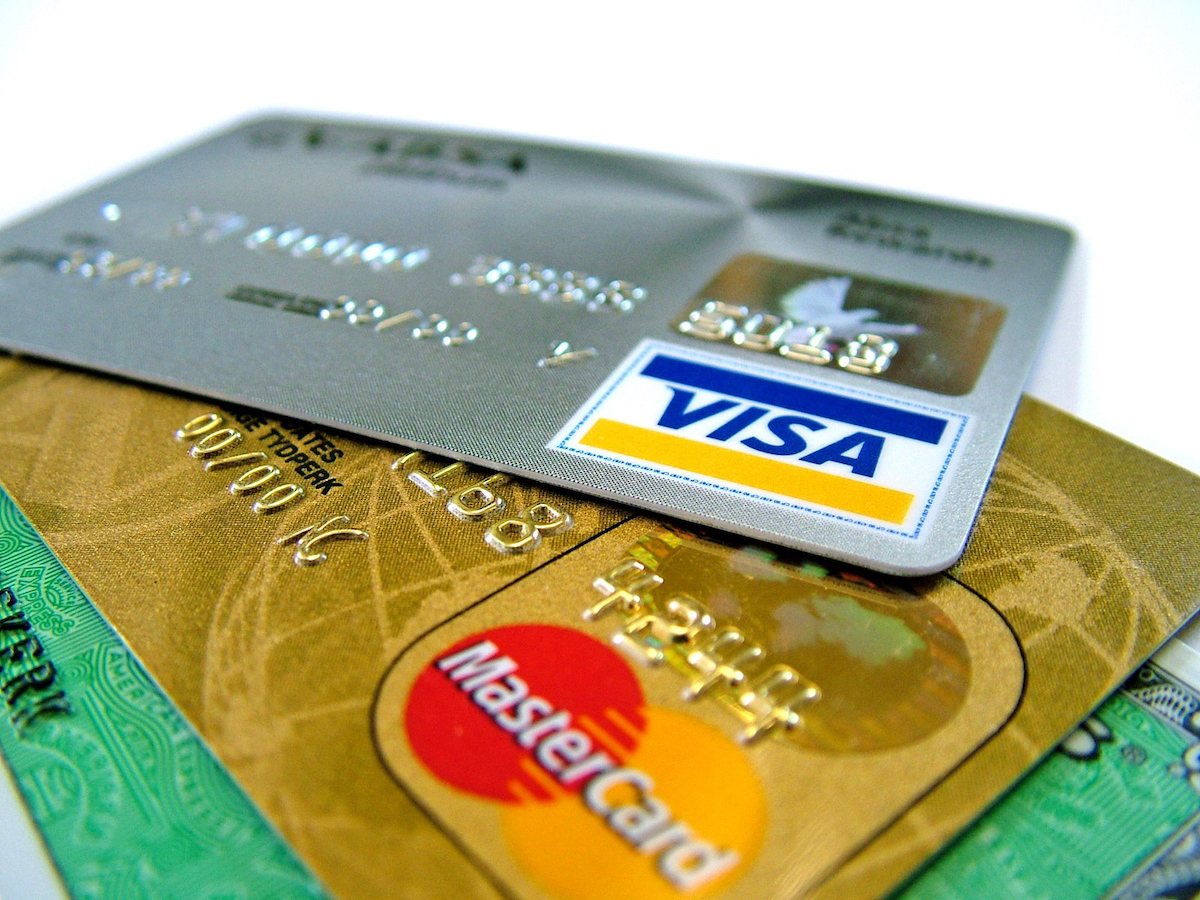
If you are more comfortable doing most of your financial transactions with credit cards that is your prerogative OK; however, you do need to be aware of the potential hazards. Just like in North America, if you are using your card in certain places, it probably increases the risk of fraud.
If you hand your credit card over to someone at a business and they take it into a back room to do the transaction, you are at risk of them using a scanning device to steal all the information on the card. You have probably noticed that at most places where you make purchases in Canada your credit card never leaves your hand for payment anymore (e.g. In restaurants, the servers bring out debit card machines to your table).
So, even if you get through your credit card payment without being “savaged by criminals”, you still have to worry about the transaction fees charged by the “modern day robber barons” J… i.e. the financial institutions who issue the credit cards.
If you don’t know what fees you’re being charged by your financial institution, you should be able to find them quite quickly doing a Google search. The following are the fee structures for the charge card that we use predominantly.
First off, let’s look at the currency exchange fee that we are charged by our bank on top of what MasterCard charges to do the conversion. In all fairness, the MasterCard rate is fairly reasonable… not much above the Interbank Wholesale Rate, I believe. As you can see, we are being charged an extra 2.5% on top of the actual conversion rate.
“The exchange rate for converting foreign currency transactions to Canadian dollars is the rate charged to us by MasterCard International (“MCI”) plus 2.5%. … We make the conversion on the date the transaction or refund is posted to your account. “
After that 2.5 % is added, our bank charges us an additional 1% on the whole amount just because it was an international transaction.
“The 1% fee is based on the final transaction amount posted to your account including any fees or foreign currency conversion, if applicable.”
Again, some financial institutions will offer charge cards that appear to offer lower fee structures for international use. That said, they likely will be getting their money from you in some other way if they do so.
What all of that says to me is that withdrawing cash from ATM’s in foreign countries remains the best way to go. For the most part, leave your charge cards untouched while travelling internationally.
*Update – Just after posting this piece, I came across an article/Ad at “moneysense.ca” that looked at a number of Canadian Credit card issuers who were offering “no foreign transaction fee” credit cards for international use. The article referenced, no fees, but what I noted was they didn’t mention whether that included extra currency exchange charges, or just the special international usage fee.
I looked at a couple of the cards closely, those offered by HSBC and Scotiabank, and discovered that, in fact, neither charge an additional markup on the currency exchange, or usage fees. Check out the article if you would like to check into picking up a “travel” card for your spending purposes when abroad rather than use cash.
I’m fairly certain that the currency exchange rate they both charge would be slightly higher than a cash withdrawal, but certainly worth a look if that is of interest to you. Also, keeping in mind that these folks will get their money out of you one way or another. 🙂
When to Use Charge Cards
That all said, as with most things, there is a caveat. There will be times when you are travelling that it is a better idea to use your charge cards than cash.
These are already probably intuitively obvious to you. If you are making an online ticket purchase or booking a hotel when you are abroad, you will need to use your charge card. Keep in mind that it is generally much safer to be sharing your charge card information over the Internet than it is to hand it to a human being.
We also use them when doing car rentals… often simply because doing so ensures that you automatically have collision insurance. We would also use one when making large purchases.
 Euro Currency Bank Account
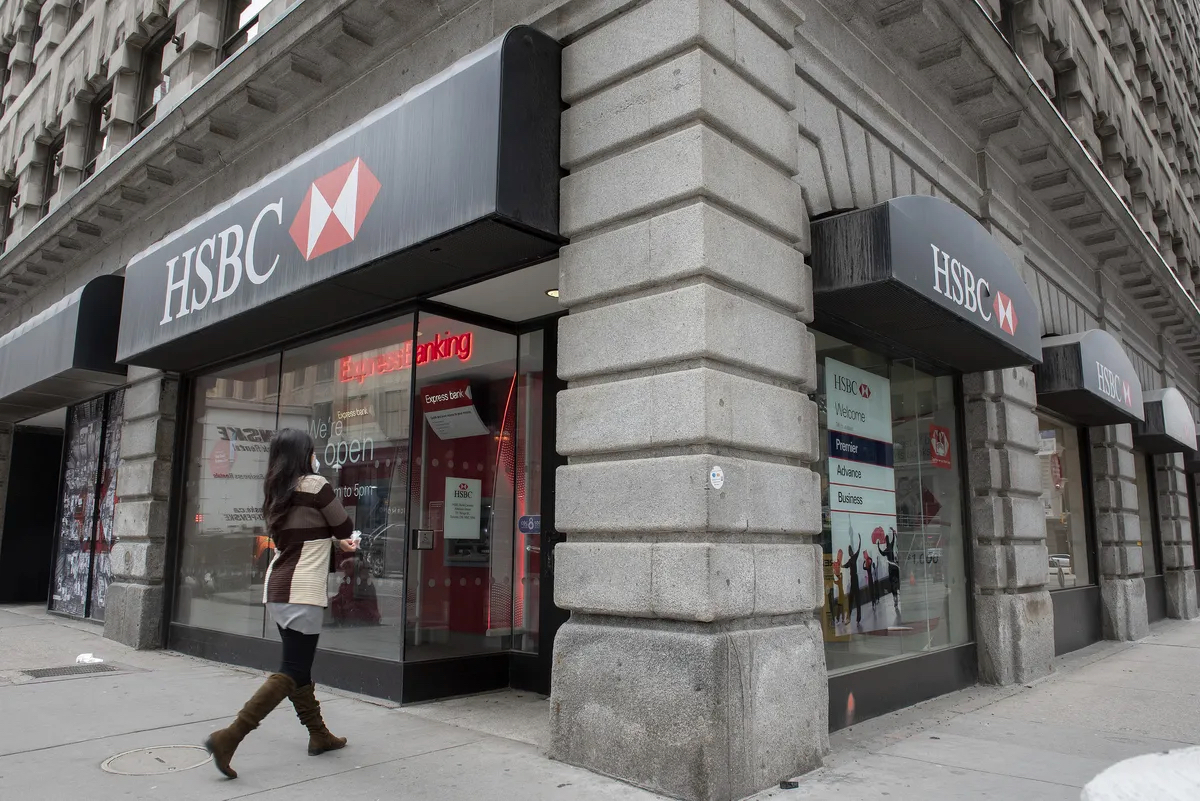
I did think recently that the way to go might be to set up a bank account in Canada that allows you to save euros in the same way we have been saving US dollars. For the record, several banks do offer these types of accounts. The two I investigated were obtainable through HBSC and Scotia Bank.
My thought was that I would set up an account and purchase euros when the exchange rate was favorable. When I came up with this idea the euro was worth about $1.30 Canadian, while now it has drifted up to just over $1.40 Canadian… that part of the plan would have worked out very nicely.
The second part of the plan was that I would use the debit card issued by whatever bank I set up the account with to withdraw funds in Europe directly from my Canadian euro bank account. Unfortunately, you are not allowed to do that. Canadians can only draw on Canadian dollar bank accounts when they are travelling internationally.
As it turns out individuals can only do “in bank” withdrawals from a foreign currency account in Canada. The net result was that if I wanted to use the money in my euro account, I would have to draw the funds all out before traveling… Sheesh!
It All Comes Back to ATMs
There you have it. When you drill down into all the various fees that can trip you up while performing international transactions, it is clear that withdrawals of larger amounts of cash out of local ATMs is probably the best way to go… it is for us anyway.
I was thinking about talking about some other “money” related aspects of international travel, like tipping, but I think this is enough money information for you to digest right now.
If you would like to take a broader look at money related travel issues, then I would suggest that you go to the Rick Steves’ website. He has an entire section on international money related subjects that you can find here.


