
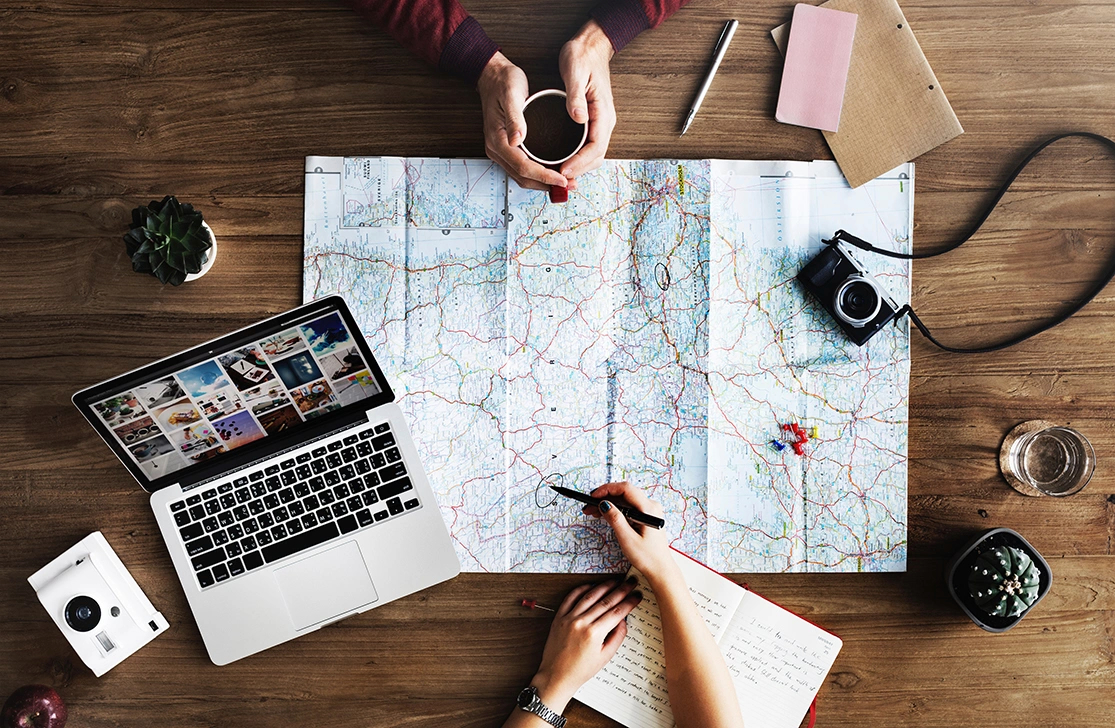
Here we are at the end of my multi-part series on extended European travel for the retiree. I hope at the end of it all you were able to extract a couple of nuggets to augment your own travel experiences.
I wouldn’t expect too many people will want to fully embrace our way of doing things, but if I have given you a couple of fresh ideas to try out I will sleep better tonight. Okay, I will sleep just fine regardless, but I would be thrilled if you tried out some of these suggestions and they worked for you!
In this final section I’ll be examining; how to get around, resources to use, thievery, taking “stuff” with you, and money, money, money! Where to begin, where to begin. Oh right, how to get around!
Planes, Trains, and Automobiles?
One has lots of options for getting around Europe. You can fly between cities on discount airlines fairly inexpensively if you are sticking to big cities. You can rent a car, and drive yourself around. As an alternative to renting, Renault has been offering a plan for many years where you actually buy the car from them, and they buy it back from you when you’re finished your trip (https://www.renaultcanada.com/en-CA/buy-back/buy-back). You need to be travelling for several weeks to avail yourself of this opportunity, however.
If you want to enjoy the pleasure of travelling via ground transport, and want someone else to do the driving, you can get almost anywhere in Europe via bus or train. If you opt for rail travel, it can be made even more convenient, comfortable, and cost effective by purchasing a Rail Pass before you leave home. Or, you can use a combination of all of the above. The great thing about Europe is that major destinations are relatively close together, so travel between them is reasonably easy using whatever approach you choose.
 We Usually Opt for Trains
On our first major trip, the Love-goddess envisioned us driving all over Europe. Her sales pitch involved us being in control of our own destiny, and free to go wherever our fancy dictated. Unfortunately, I’m pretty sure her vision also had me doing most of the driving while she watched the countryside roll by. My vision, on the other hand, didn’t include me driving thousands of kilometers, constantly worrying about where to park the car, where to stop for bathroom breaks, and interpreting European traffic signs. At the end of the day, “we” opted to get a Rail Pass.
The Rail Pass experience worked out so well for us that for many years now we have been doing most of our internal European travel by train. I will write a full-length piece about the ins and outs of the Rail Pass experience another day; however, I would be remiss if I didn’t provide you with links to a couple of sites flogging them so that you can check out the concept (https://www.eurail.com/en/eurail-passes, and http://www.raileurope.ca). Please note that these sites will often charge slightly different amounts, or offer/not offer a senior rate, for the same service. So, shop around when buying one.
When you look at the Rail Pass sites, you will see that a wide range of passes are available, and the choice should be guided by how long you are going to be travelling, how many days you think you will be actually travelling by rail, and how many countries you are going to visit. Lots of options exist, so spend some time thinking through how often you will actually need transport, and what countries you expect to visit before you order.
That said, there are still many places you cannot get to by rail, so we occasionally rent cars to access these locations. In spite of what I just said what how I “imagined” the European driving experience, it really is not a big deal, and not that much different from driving in North America. I just don’t like driving anymore. Our car rental rules of thumb are; we always wait until we are in Europe to track down a rental car, we never rent them at an airport where you typically pay a “convenience” premium, and we check out prices at two or three different local firms before committing.
Travel Books
Even in an Internet world, travel guide books remain good resources to help you develop some knowledge about the places you are going to visit. Travel websites are great resources, of course, but they often do not provide the level of detail you need to enjoy specific locales. After many years of travel, and use of a variety of resources, I still find that travel books provide invaluable information. They remain my “go to” resource.
Yes, you can find many, many, many different publications about any place in the world you might want to visit. After much experimentation, we have landed on two that suit our style of travel best. When in Europe, we use Rick Steves’ books. The Michelin Green Guide books would be my second choice for Europe. While in any other part of the world we use Lonely Planet.
When I say book, of course I mean the book “format” that best suits your personal preference and lifestyle. I have bought many print versions of travel guides, and many digital versions as well. Sadly, I will have to admit to buying both formats of the same book on several occasions.
Paying & Money
When it comes to paying and money, travelling in Europe is really no different than travelling in North America. Most businesses accept a wide range of charge cards if that is your preferred payment method. One of the benefits of the European Union is the single currency. This makes it much easier to compare prices within EU countries. Additionally, if you prefer to pay cash, you don’t have to worry about constantly changing from one currency to another.
On our last couple of forays into Europe we switched from using credit cards to paying for most things with cash. The primary reason is the currency exchange rates. Bank machines typically offer the best exchange rate. When you use charge cards you’re also paying a premium to convert euros back into Canadian dollars for payment purposes. The vast majority of ATMs in Europe allow you to draw funds out of your account in exactly the same manner as at home. If you have a good bank plan you probably will not even pay an extra fee for this privilege. If you are paying a fee, it’s a good idea to take out a large amount of cash each time you do it, say 300-500€. This means it’s always a wise idea to travel with a money belt in which you can conceal the extra cash, rather than carrying it around in your wallet or purse.
 Tourist Information Offices
Other great resources to tap into while traveling around Europe are the local tourist information offices. Good guide books will identify where you can find them in a city before you arrive. If you haven’t checked beforehand, you can ask where to find one at the general information desk in most airports or train stations upon arrival.
TI’s will typically provide you with maps and information about local sites you may wish to visit, help you book accommodation in some cases, and inform you about special events that are taking place locally that are not listed in travel guides. They’re also great places to book day trips to sites that you need a vehicle to get to. For the most part these will be reasonable in price, typically costing less than to rent a car to travel there on your own. The only caveat I would add about tourist information offices is, while many are run by municipalities or the state, a number are simply private enterprises that are intent on selling the special trips and guided tours that firms they are affiliated with provide. They often try and make themselves appear to be “official” offices. I’m not saying this is a bad thing, but it’s good to know that other options are likely available. Always try to seek out official tourist offices first.
Theft Protection
Violent crime, other than acts of terrorism, of course, is rare in Europe. The one area that travellers do need to be vigilant about is pickpocketing. It is a good idea to be mindful of this potential threat because pickpockets come in all ages, genders, and appearances. And, they typically hang out in the areas tourists frequent. That does not mean you need to be hypervigilant, but it does mean but you should not be “sloppy” with your asset management.
Pickpockets typically go after easy targets, so the first step in self-protection is not to look like an easy target. Don’t have your cell phone hanging out of your back pocket, don’t walk around with an open purse hung off your side or behind you, and don’t be gawking around completely oblivious to your surroundings. In general, try to avoid looking like a tourist, and do your best to look like a local. Here’s a link to a fun article by The Savvy Backpacker on how to avoid dressing like a tourist, and look more like a European.
As part of our own security precautions we now carry a special “travel” wallet and purse. Both are RFID protected, so our charge cards cannot be scanned. Additionally, the Love-goddess’ purse has special clips to prevent anyone from opening up a pocket without her knowing.
I would like to report that the Love-goddess and I have always been exemplary examples of theft prevention, but sadly, that has not been the case. Like many others we have learned that lesson the hard way. Our first lesson was in Frankfurt Germany. While in an Internet café in the early 2000s the Love-goddess decided that she didn’t want to share a computer and walked off into the front office to arrange for her own. She left her purse hanging on the chair behind me. A local, enterprising individual grabbed her purse without me noticing, and probably walked out right behind her into the front room, and out the front door. When the folks at the Internet café phoned the local police, they directed us to go to the police station in the Frankfurt train station, which was close by. When we arrived, they told us they could only deal with crimes committed on the train station property, but happily directed us to another station close by. Off we went.
As it turned out, the purse snatcher was a thoughtful thief. After he or she took the cash out of the purse they dropped it in front of the train station so that it would be found. Someone found the purse, took it inside the train station to the police station, and they called over to where they had sent us to report they had the purse. The Love-goddess’ passport, charge cards, and other important documents were still in it. What started out as a bit of a nightmare has become an amusing antidote that we love to share with fellow travelers. Fortunately, our story had a happy ending. They don’t all.
We also had our Rail Pass stolen in Italy, but I’ll save that story for when I write about rail passes. Fortunately, it too ended up having a happy ending.
 What to Take, What To Leave Home
To reiterate what I said in Part A of this article, travelling light is ultra important. Knowing what things to take with you when you travel is essential, of course. But, knowing what to leave home is just as important. You will think lots of things are necessary; however, you need to ask yourself, if I am going to use it only once or twice, is it really that necessary?
The beauty of Europe is that when it comes to creature comforts and the necessities of day-to-day living, things are really no different than at home. You don’t need to load up with all of your favorite products and personal items. You will be able to buy identical or similar products to what you use at home. Similarly, if you think you need a one-time use item, why not buy it while you are there? You could even dispose of it after you’ve used it, rather than schlepping it all over the continent.
So, what do you take, what do you leave? Take your cell phone, but you leave your camera at home. Most cell phones nowadays have cameras that take quality photos so you don’t have to carry around a DSLR camera. Dangling a camera around your neck, or even pulling out a point and shoot camera, identifies you as a tourist. Taking photos with a cellphone makes you look like every other European. Most of the photos on this website were shot with an iPhone.
Speaking of cell phones, try and leave your Canadian cell phone plan at home as well. We travel with unlocked cell phones, which allow us to pick up a local SIM and service provider in Europe. This is very easy to do, and inexpensive as well. Many of you will still have “locked” cell phones that must be used with the service provider from whom you received them at a discounted price or for free. Up until now this would have prevented you from getting a local service provider. However …
The good news for Canadians is that starting on December 1, 2017, service providers were required to sell only unlocked phones. And, if you have a locked phone, you have the right to have your service provider unlock it for you free of charge. Read here: https://www.canada.ca/en/radio-television-telecommunications/news/2017/06/crtc_puts_an_endtolockedcellphonesandunlockingfees.html. I have never crunched the numbers, because we use pay-as-you-go plans at home, but I am fairly certain that it is less costly to hook up with a European Service provider then it is to pay a Canadian provider roaming fees. This is especially true if you are going to be traveling for several weeks.
A Swiss Army knife is something we never travel without. Having a sharp knife to cut up food, and a corkscrew and a bottle opener to open adult beverages is invaluable.
If you have a large screen cell phone you might be able to get away without taking a tablet with you. For us, having a tablet has proven to be very useful. They allow you to read newspapers from home, FaceTime or Skype with family and friends, do your banking online, or to read books; all on a reasonably sized screen. They are invaluable tools.
Take no more than two pairs of shoes. Consider whether you might even be able to get away with one pair. Dark, comfortable walking shoes that you can pass off as dress shoes, if absolutely necessary, are preferred. Remember, if you find you are in need of an additional pair while abroad you can always buy them there.
The other small items that we typically will take with us are; a collapsible day/backpack, some zip lock bags, a couple of extremely lightweight grocery bags, a lightweight travel umbrella each, a map of Europe if we are going to be travelling broadly, a small spiral notebook and a couple of writing implements, and a folder or a large envelope to hold assorted documents.
Most of your electronic gear will be dual voltage 110-120V and 220-240V, so they can be plugged directly into all European electrical wall outlets. This means you’ll only need to take plug adapters. If you forget to take them, not to worry, they are widely available in Europe. It is always a good idea to take several with you, especially if you have numerous devices you need to plug in … or if your spouse has a habit of leaving them stuck in the socket when unplugging a power cord. 🙂
 Cost
Cost
So, at the end of all this you may well be thinking, what about the most important travel issue? How much is all this going to cost? When we are abroad I track all of our expenses in a spreadsheet. I’ll spare you the details of how I do that, but at the end of it all I do come up with an all-in per day cost.
Typically, a trip of at least four weeks, where we are travelling most of the time, will cost us around $450 per day. This probably seems high to you but remember this is for a couple and includes every penny we spend on the trip (e.g. airfares, local transportation, food, museum and gallery visits, etc., etc.). Doing the math, this works out to about $13,000 – $14,000 for a month-long trip.
Interestingly, Barry Choi came up with a somewhat similar cost in an article he wrote for moneysense.ca. He broke down the amounts spent by roughly the same categories I use when recording our expenditures. I could find no real fault with his estimated costs. Dividing his total of $6670 for a two-week trip by 14 comes up with a cost of approximately $475 per day. Give his article a read; he also speaks to a number of ways you might be able to reduce your trip costs.
Both of our daily cost numbers may seem high to you, but there are many things you need to deduct from that number to get your “true cost” for the trip. What I refer to as “true cost” is the amount of money that you will spend on a trip, above and beyond what you are typically spending during the same timeframe at home.
From the grand total, whatever it works out to be for you, you deduct the amount of money that you would normally be spending if you had stayed at home. This will not necessarily be a small amount if you are travelling for a month or longer. They are variable expenses things like; groceries or restaurant charges, gas for the cars, furnishings for the home, booze, gifts, anything that you’re not obligated to pay each month.
Of course, you do not deduct your fixed expenses like hydro, gas, water, or anything else related to the operation of your home. You continue paying those regardless if you are home or travelling. However, if you are traveling for more than a month you will find that some of your fixed costs can be temporarily reduced. When we travel for extended periods we are able to suspend our Telecom services (TV, internet, house phone) and health club fees. You may be able to do so as well.
When we have extended stays in one locale our costs typically are less than the daily average I have suggested. The cost of a week or two-week long rental is typically less than what you will pay for hotels, and you can cook most of your own meals.
Enjoy the Ride
The most important aspect of travel, no matter how you do it, is to enjoy yourself! I could say “don’t worry about the cost”, but of course you have to. BUT, don’t perseverate over every penny you spend! Just worry about immersing yourself in the experience. Happy travels!


